Summer · Skomer
Puffins on Skomer Island
Off the tip of Pembrokeshire, a small island holds tens of thousands of puffins in summer, nesting in burrows beside the paths, and one of the world's largest shearwater colonies.
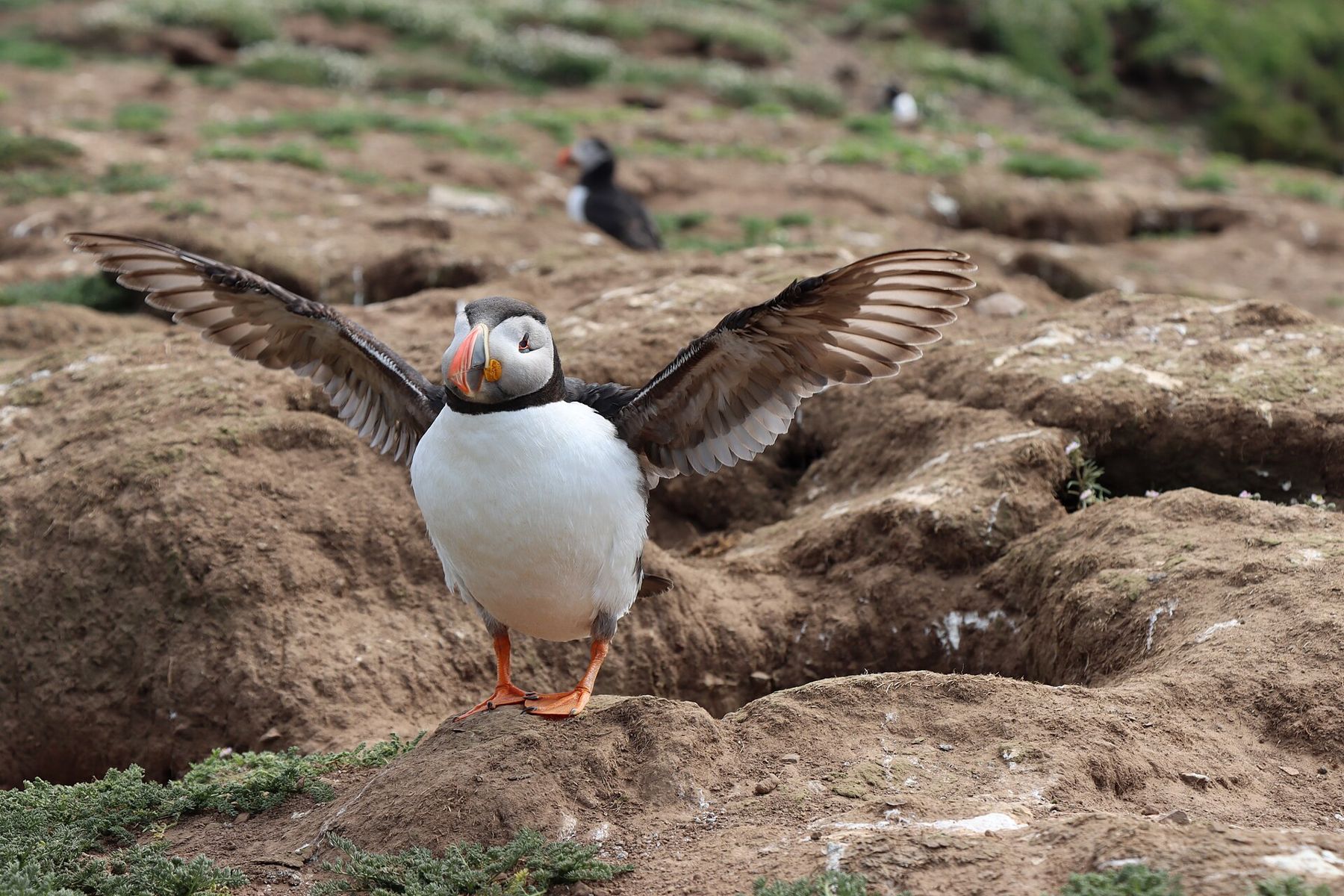
The boat lands at a small cove below cliffs, and within a few minutes' walk you are among puffins. They stand in pairs on the grassy slopes, waddle in and out of burrows, and land beside the path with their bills crammed with fish. They seem unconcerned by the people walking past, and with care you can watch them at a distance of a few metres without disturbing them.
Skomer Island lies just off the western tip of Pembrokeshire, in south-west Wales. It is a National Nature Reserve surrounded by a Marine Conservation Zone, and in summer it holds one of the largest puffin colonies in southern Britain, along with many other seabirds.
The puffin year
Atlantic puffins, Fratercula arctica, spend most of the year at sea, out in the Atlantic. They come ashore only to breed. On Skomer, the first birds return in late March and early April, rafting on the sea around the island before landing to clean out their burrows. Each pair lays a single egg, usually in late April or May, deep inside a burrow.
The best time to visit is from late May to mid July, when chicks have hatched and the parents are bringing them food. This is when you see the classic image of a puffin with a bill full of sand eels and other small fish, flying in from the sea and dropping into its burrow. Chicks, called pufflings, leave the burrow alone at night when they are ready, usually in July. By the end of July or early August most of the adults have left the island again.
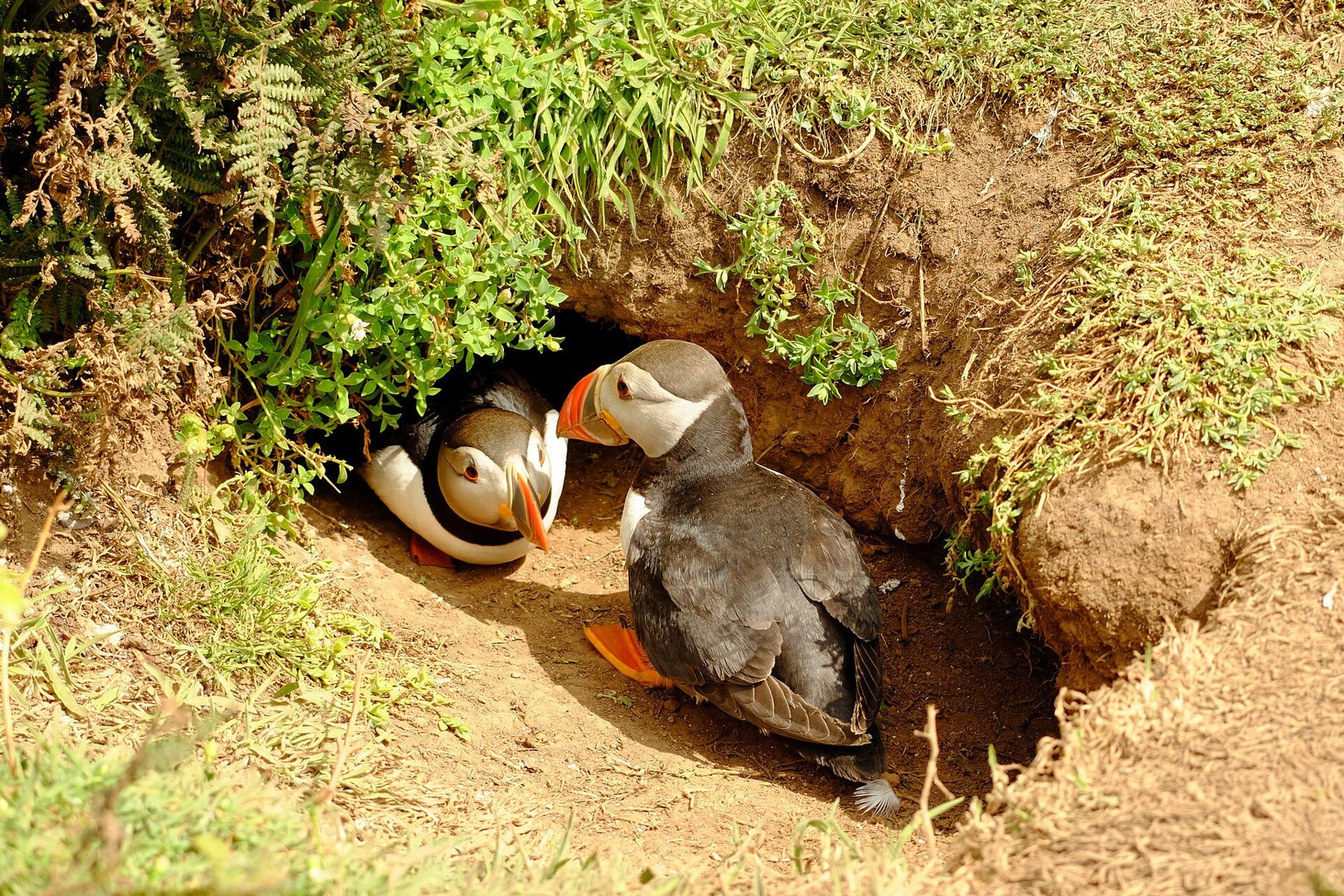
Puffin numbers on Skomer have been counted for many years, and the colony currently numbers in the tens of thousands. Like seabirds everywhere, they depend on the availability of fish, and good and poor breeding years vary with conditions at sea.
The crossing and a day on the island
Day visits are by boat from Martin's Haven, a small cove on the mainland a short drive from the village of Marloes. The crossing is short, through Jack Sound, but it is weather-dependent: in strong winds or heavy swell the boats do not sail, sometimes for days at a time. The number of visitors landing each day is limited, and the island is closed to day visitors on certain days. Booking arrangements, sailing days and landing fees change, so check them before you go, and have a back-up day in your plans if you can.
Turn the page to AprilBluebell woods in an English springOnce landed, there is a short talk from reserve staff about the island's rules, and then you are free to walk the paths until the last boat. There are no shops, so bring food, water and waterproofs. Paths are rough, with steps up from the landing. A circuit of the island takes a few hours at a steady pace, though most visitors spend much of their time at the best puffin spots.
Burrows and paths
Puffins nest in burrows they dig themselves or take over from rabbits, often under the turf on the island's slopes and cliff tops. Much of the island is honeycombed with them. A burrow can be just under the surface, and a footstep in the wrong place can crush it, trapping an adult or a chick inside.
This is why the rule on Skomer is simple: stay on the marked paths at all times. The puffins often sit right beside the paths, and sometimes on them. Give them right of way, stand still if one crosses in front of you, and let them come and go from their burrows without crowding them.
A burrow can be just under the surface, and a footstep in the wrong place can crush it, trapping an adult or a chick inside.
- Do not lie down or kneel off the path for photographs.
- Do not block a puffin's route to its burrow.
- Keep your voice down near the busy slopes.
- No dogs, and no drones.
- Take all your litter back with you.
The Wick and other places to watch
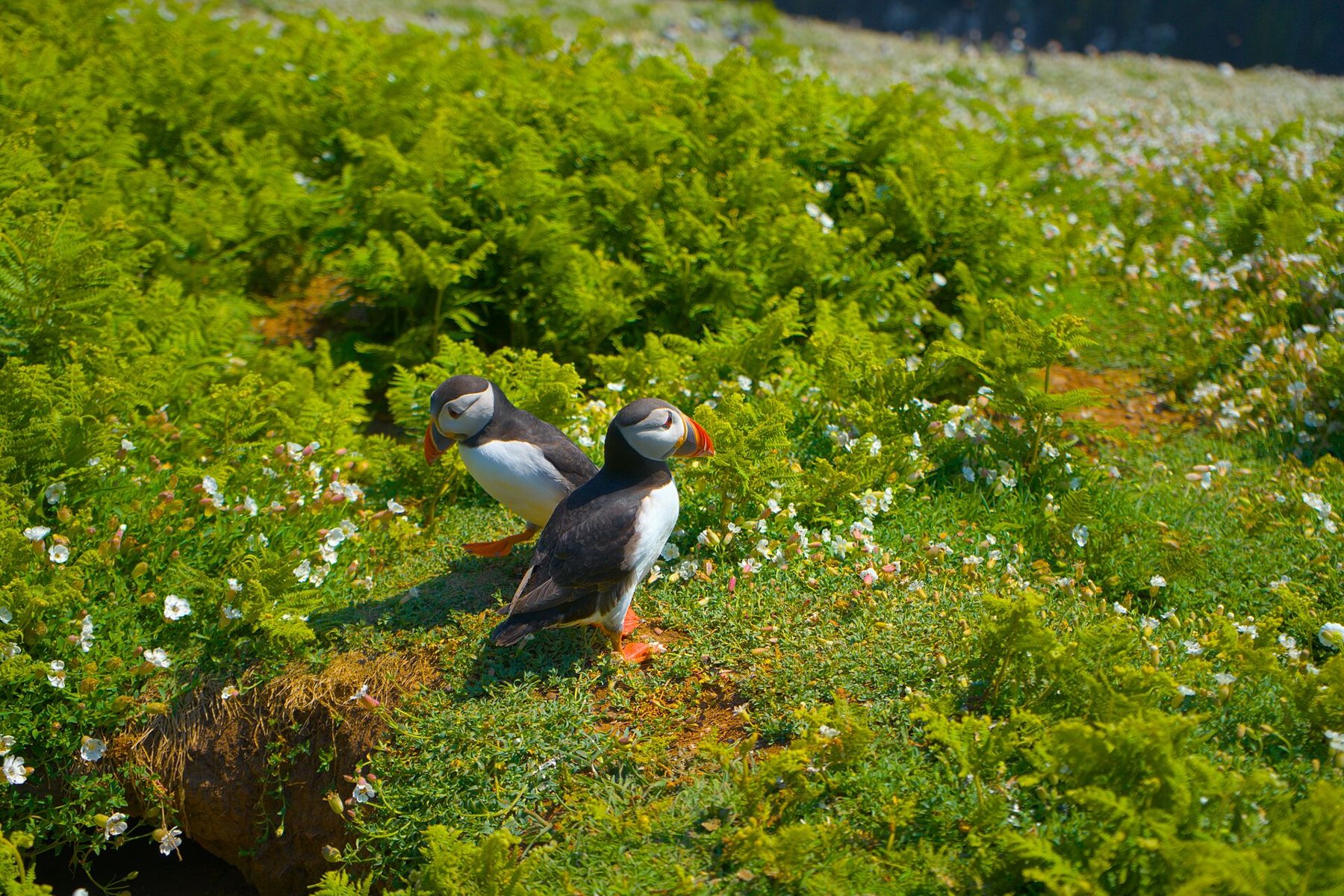
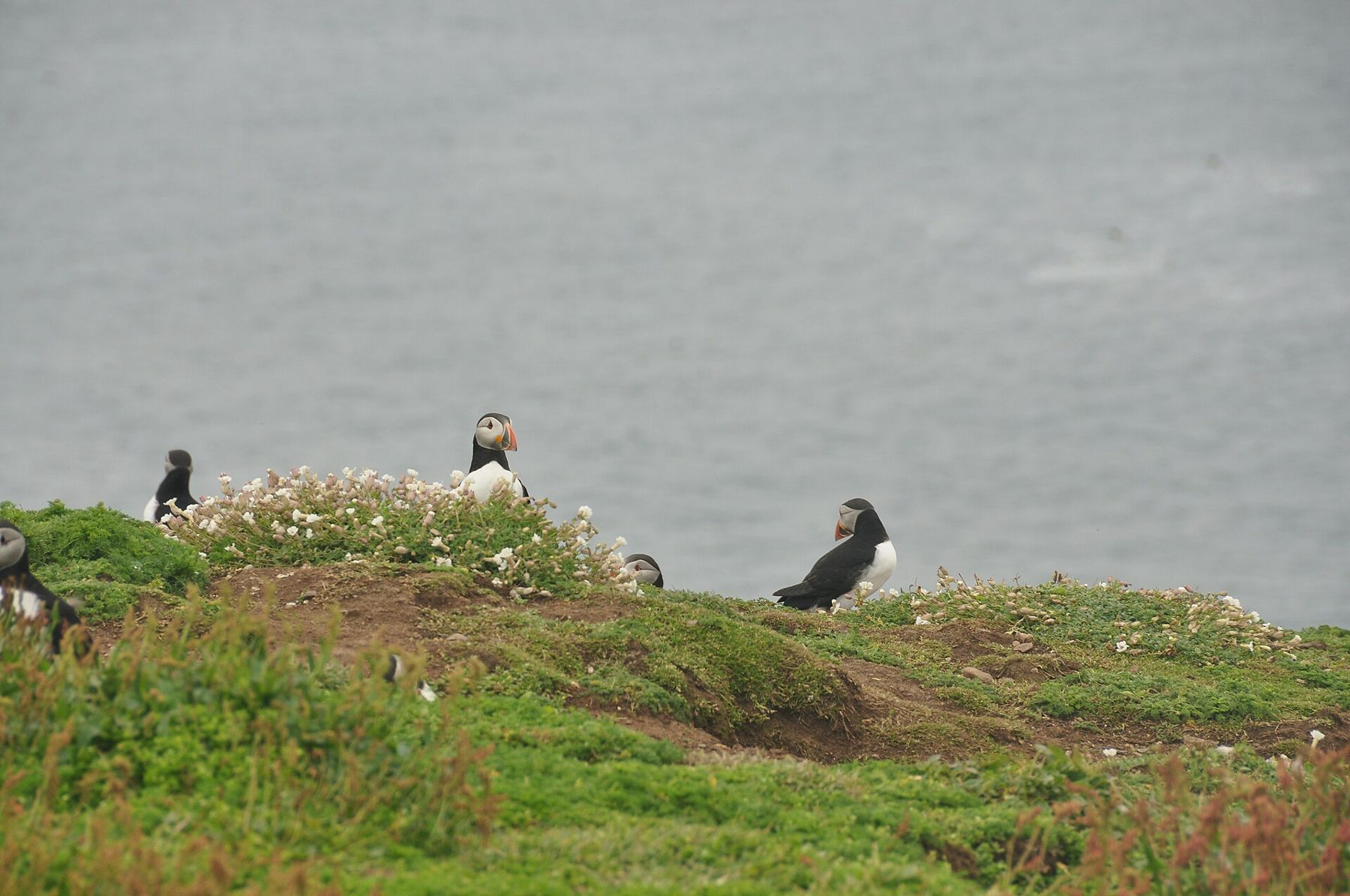
The Wick, a deep inlet on the south side of the island, is one of the most famous places on Skomer. Its sheer cliffs hold guillemots, razorbills, kittiwakes and fulmars on narrow ledges, while the grassy slope above is one of the densest puffin areas, with birds sitting close to the path. Puffins are also numerous near the landing.
Spend time simply watching one patch of slope. Patterns appear: birds landing with fish and vanishing underground in seconds, pairs standing together at a burrow mouth and rubbing bills, a sudden mass take-off when a gull flies over, and then a slow return. Puffins often gather in loose rafts on the sea below the cliffs, and from the cliff top you can see them diving and surfacing. Late afternoon, as the light softens and more birds come in from feeding, is often the busiest time on the slopes, though the boat timetable decides how long you can stay.
Puffins carry fish crosswise in their bills, held by spines on the tongue and palate, which lets a parent catch several small fish on one dive without losing the ones it already holds. Gulls know this, and some specialise in chasing returning puffins to make them drop their catch.
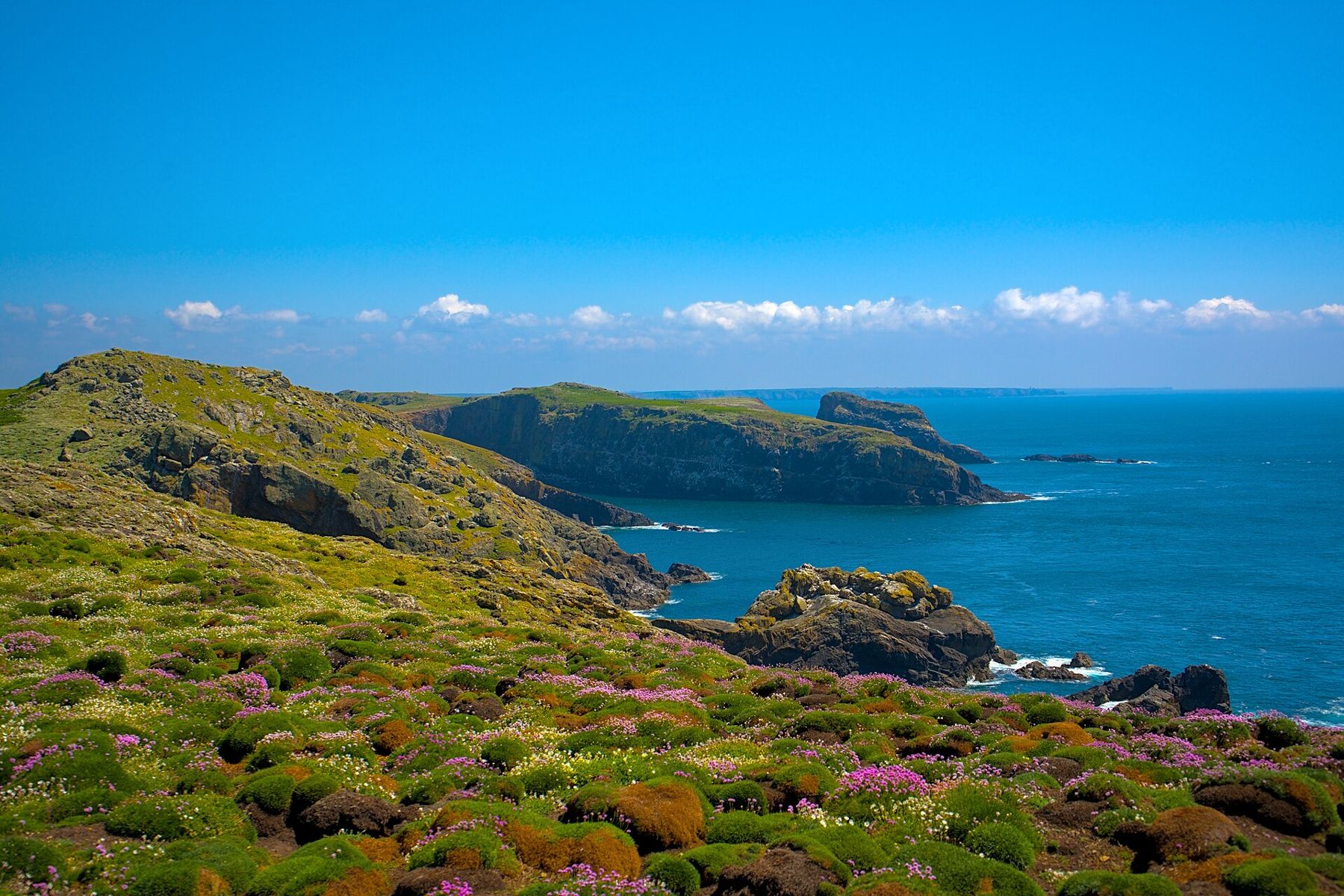
The island has other wildlife too. Grey seals haul out on the beaches and rocks, and in autumn pups are born here. Skomer has its own subspecies of bank vole, found nowhere else. In late spring, much of the island turns blue with bluebells and pink with red campion and thrift, a sight that rivals the bluebell carpets inland.
The Manx shearwaters
Skomer is best known for puffins, but its most important birds may be the Manx shearwaters. The island holds what is thought to be the largest breeding colony of the species in the world, with hundreds of thousands of birds nesting in burrows across the island. Together with nearby islands, it holds a large share of the world population.
Day visitors rarely see them alive. Manx shearwaters are clumsy on land and vulnerable to large gulls, so they come and go from their burrows only after dark, filling the night with strange, cackling calls. During the day, you may see their remains on the paths, killed by great black-backed gulls. The reserve offers limited overnight stays for those who want to experience the night arrivals.
A day on Skomer combines naturally with the bluebell woods of an English spring if you come in May. For those who enjoy seabird spectacles, other colonies around the Atlantic coasts offer different species, and the northern coast of Norway holds puffins too, though there the summer midnight sun replaces the winter aurora.