Autumn · Christmas Island
The red crab migration on Christmas Island
With the first heavy rains of the wet season, tens of millions of red crabs leave the forest of Christmas Island and march to the sea to spawn. A guide to timing, roads and etiquette.
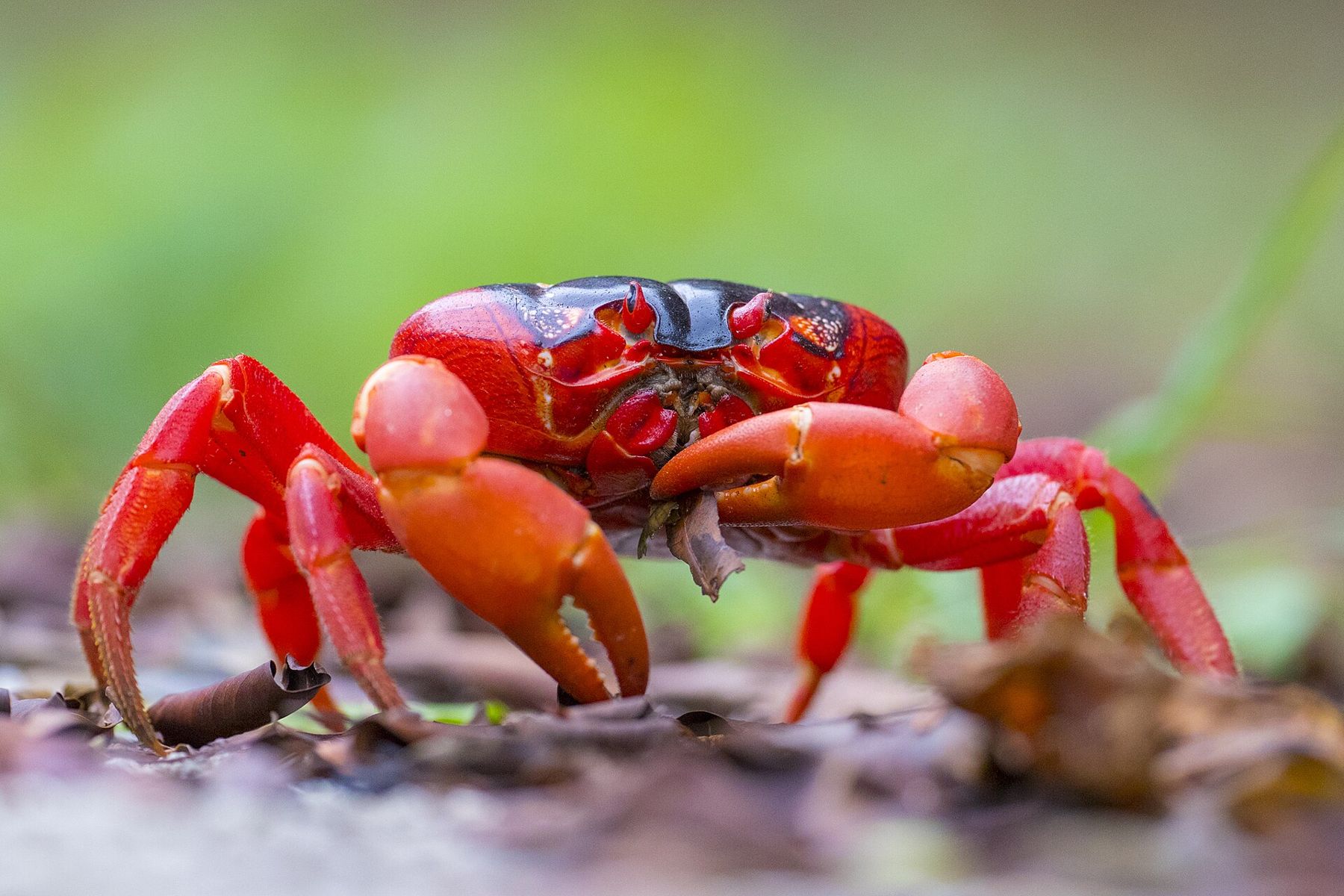
Christmas Island is a small Australian territory in the Indian Ocean, south of Java and a long way from the Australian mainland. Most of the island is covered in rainforest, and much of that is protected as Christmas Island National Park. The forest floor belongs to land crabs, and the most famous of them is the red crab (Gecarcoidea natalis), found nowhere else.
Tens of millions of red crabs live on the island. For most of the year they stay in the shaded forest, feeding on fallen leaves, fruit and flowers. But once a year, with the coming of the wet season, they make a mass journey to the sea to breed, and the island is transformed.
Timing with rain and moon
The migration is set off by the first heavy rains of the wet season, which usually arrive around October or November. The crabs need humid conditions to travel, because they can dry out easily, so the rain gives them the moisture they need to leave the forest.
The final timing is set by the moon. Females release their eggs into the sea just before dawn on a high tide around the last quarter of the moon, when the difference between high and low tide is smallest. That timing reduces the chance that eggs and larvae will be stranded or swept away. Because both rain and moon are involved, the exact dates vary from year to year, and in some years the migration is spread over two lunar cycles. The local park service usually publishes predicted dates; check them before you go.
The journey
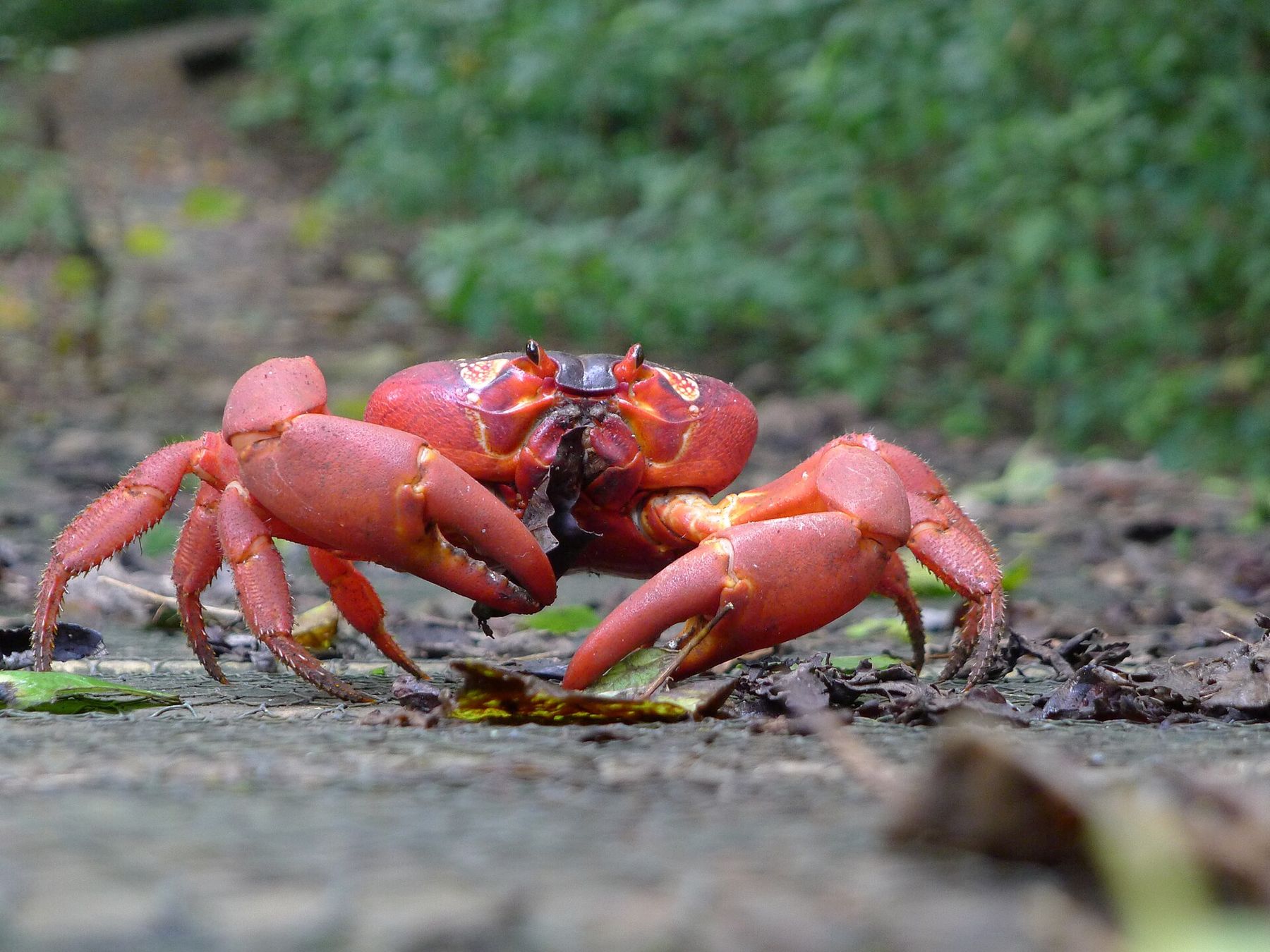
The males set off first, walking for days from the plateau down to the shore terraces. There they dig burrows and defend them from rivals. The females follow, and mating takes place in or near the burrows. The males then begin the walk back inland, while the females stay in the burrows for around two weeks while their eggs develop.
When the moon and tide are right, the females come down to the water's edge in the darkness before dawn, holding their egg masses against the waves and shaking them free. The eggs hatch on contact with seawater. Then the females, too, return inland.
Turn the page to AugustGreen turtles nesting at TortugueroThe larvae spend several weeks at sea. Most are eaten by fish and other animals. In some years, very few survive. In others, huge numbers of tiny young crabs, each only a few millimetres across, come out of the sea together and march inland, covering the rocks and beaches in red.
The young crabs take years to grow to adult size, living hidden among rocks, logs and leaf litter on the forest floor. A good breeding year can sustain the population for a long time, which is why a few bad years in a row are not an immediate disaster, but a long run of failures would be.
Roads, fences and bridges
The crabs do not stop for roads. During the migration, sections of road may close to traffic, and drivers are asked to drive slowly and avoid crabs where roads remain open. Over the years the island has built crab fences that guide the crabs to underpasses beneath the roads, and at least one dedicated crab bridge carries them over a road.
Plan for this: you may need to walk instead of driving, or wait while crabs cross. Follow closures and signs, and ask locally if you are unsure where you can go.
Threats to the crabs
The red crab population has faced a serious threat from yellow crazy ants, an invasive species that forms large colonies and can kill crabs in great numbers. Control programmes, including baiting and biological control, have been used to reduce ant numbers and protect the crabs. Their success matters, because the red crabs shape the forest itself, eating leaf litter and seedlings and affecting which plants grow.
Other land crabs live on Christmas Island too, including the robber crab, also called the coconut crab, which is the largest land-living arthropod in the world. You may see them in the forest, especially at night.
Watching with care
The migration is a spectacle, but it is also a vulnerable moment for the crabs. Keep these points in mind:
- Watch where you step; crabs move fast and can be underfoot before you see them.
- Do not handle the crabs or move them unless asked to by park staff.
- Follow road closures and drive slowly where roads are open.
- No drones over the migration without permission; check the rules.
Getting there
Christmas Island is reached by flights, mainly from Perth in Western Australia. Flights are limited, and the island's accommodation is small, so plan early. The weather in the wet season is hot, humid and rainy. Bring a rain jacket, closed shoes for walking among crabs and a torch for the pre-dawn spawning.
The island's own seasons follow the southern hemisphere. In the northern hemisphere's calendar, the migration falls in late autumn, which is why it appears here. In the island's own terms, it is the start of the wet season, around the austral spring and early summer.
Calendar companions
Mass movements to the sea to breed are a theme across the calendar. On the Caribbean coast of Costa Rica, green turtles nesting at Tortuguero leave the sea to lay eggs on the beach, the reverse of the crabs' journey. And in the northern spring, sandhill cranes on the Platte River gather in their hundreds of thousands, another spectacle timed to the season.