Spring · Platte River
Sandhill cranes on the Platte River
Each March, most of the world's sandhill cranes pause on a short stretch of the Platte River in Nebraska, roosting on its sandbars by night and feeding in the fields by day.
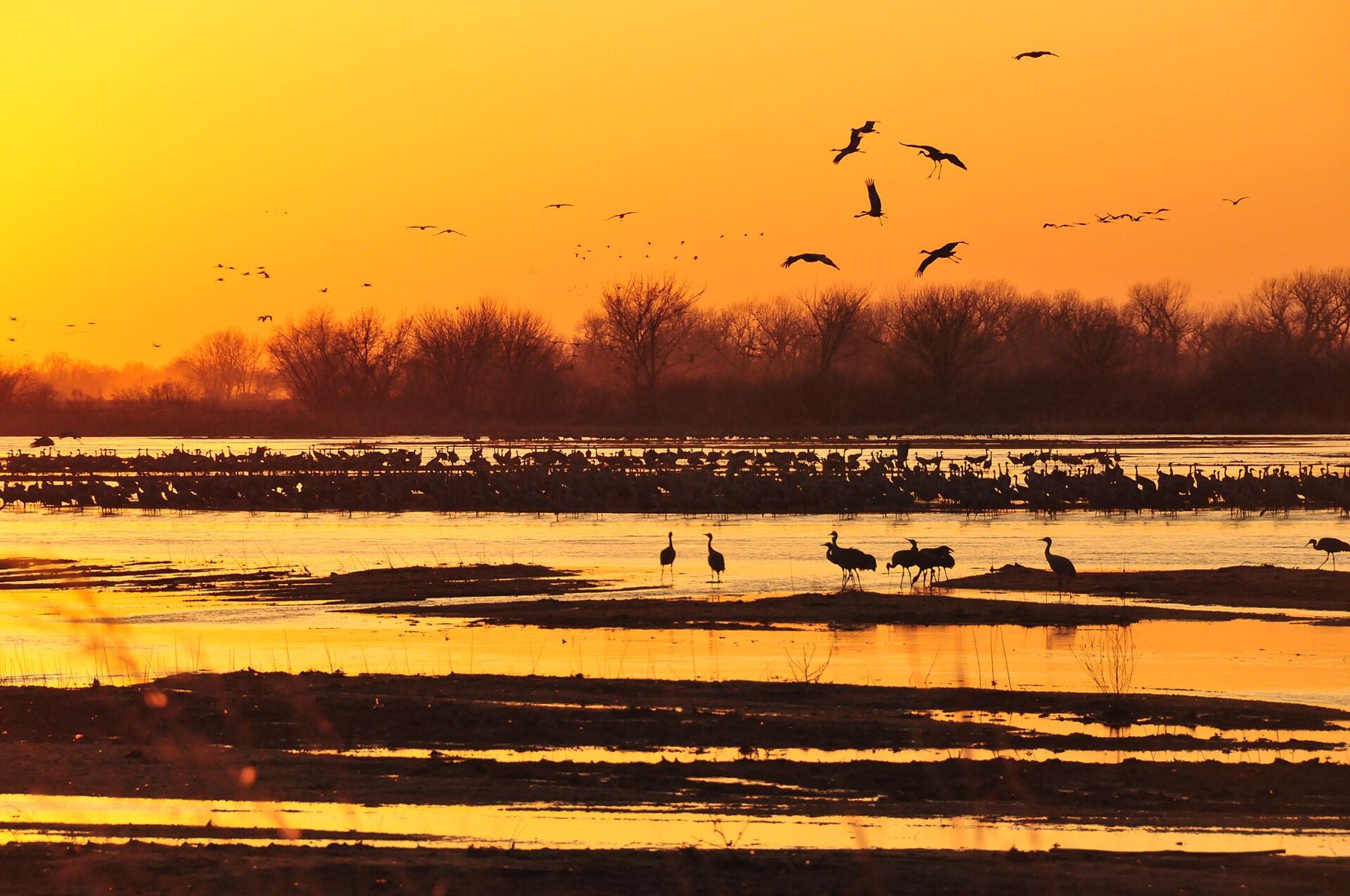
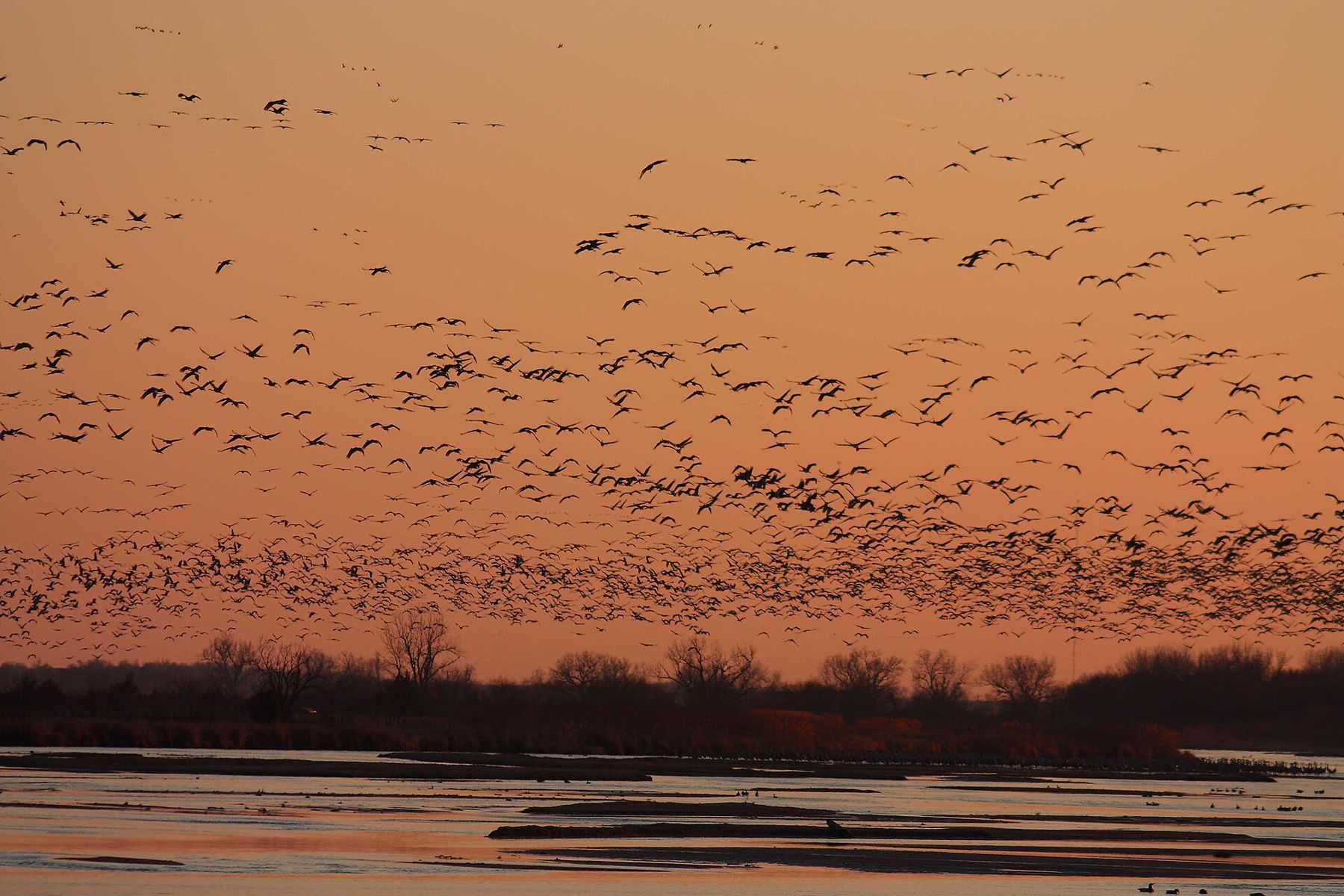
The sound arrives before the birds. Just before sunset along the Platte River, a rolling, rattling call carries across the fields from every direction, and then the cranes appear: long lines of them against the sky, then dense flocks, dropping with legs dangling onto the shallow sandbars in the river. By dark the river can hold tens of thousands of birds in a single stretch, standing in the water and calling.
The sandhill crane gathering in central Nebraska is one of the great wildlife spectacles of North America, and one of the easiest to reach. It happens every spring along a section of river between roughly Grand Island and Kearney, and it lasts only a few weeks.
Why the cranes stop here
Sandhill cranes, Antigone canadensis, spend the winter in the southern United States and northern Mexico, and breed across Canada, Alaska and as far as eastern Siberia, with some populations in the northern United States. On the way north in spring, a very large share of them stops in central Nebraska, where the Platte River gives them two things they need: safe places to sleep and plenty of food.
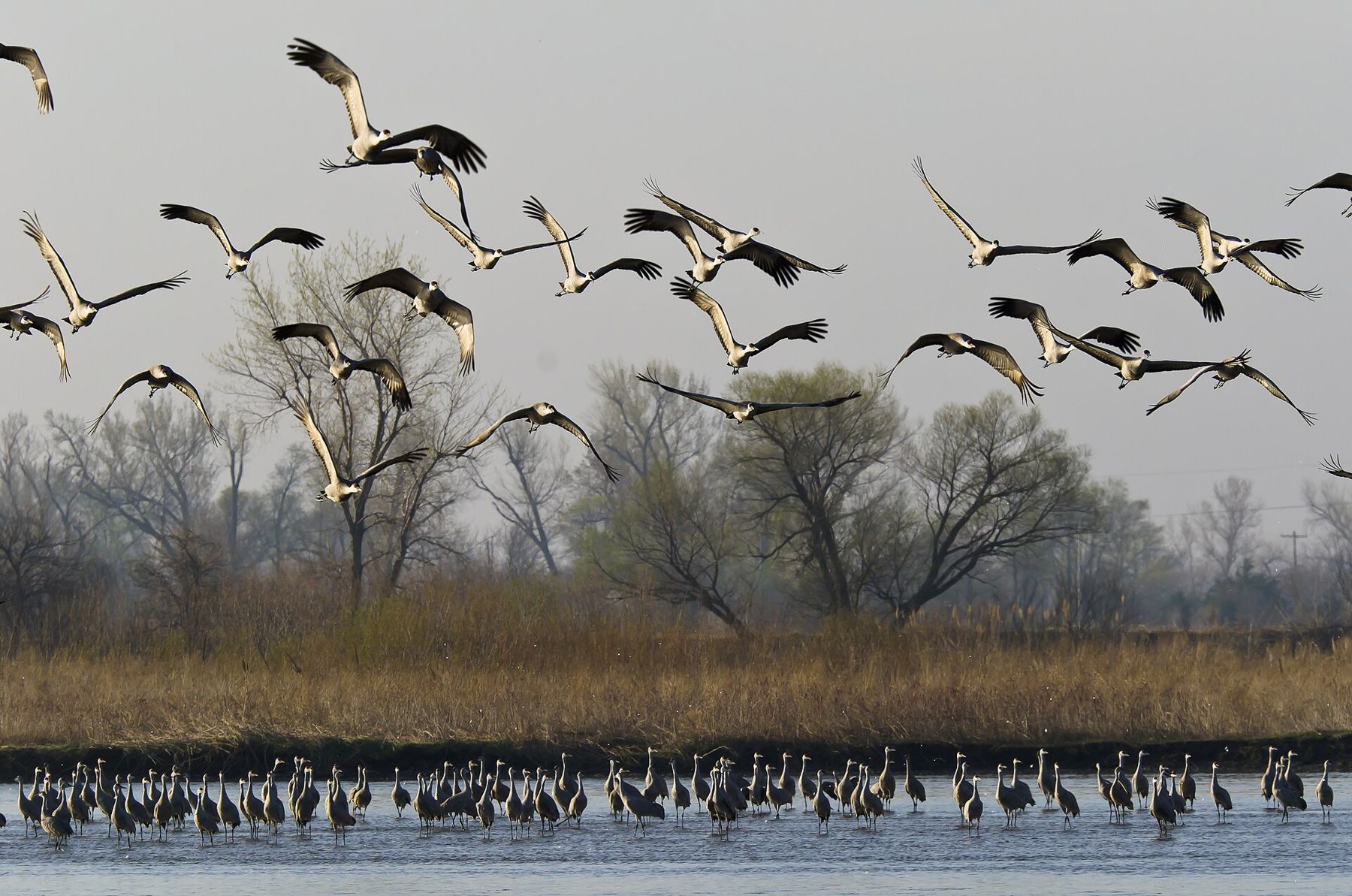
The safe place is the river itself. The Platte here is wide, shallow and braided, with sandbars separated by channels of moving water. Cranes roost standing in shallow water at night, where predators such as coyotes cannot approach without being heard. The food is in the fields and meadows nearby. By day, the cranes spread out over farmland, feeding on waste corn left from the previous harvest, which gives them energy and fat for the journey ahead. In wet meadows along the river they find invertebrates, which provide protein and minerals they need for breeding.
The season and the daily rhythm
The first cranes arrive in late February, numbers build through March, and the peak usually falls in mid to late March. By early to mid April most have moved on. The timing shifts with the weather; a cold spell or late snow can hold birds back, and a warm spring may move them on earlier. Counts are made each season, and the gathering is usually measured in hundreds of thousands of birds. Most individual cranes stay a few weeks before continuing north.
The daily rhythm is simple. Cranes leave the river around sunrise to feed in the fields, and return to roost at sunset. Both moments are worth seeing. The dusk arrival builds over an hour or more as flocks stream in, and the dawn departure can happen all at once, the whole roost lifting off the river with a roar of calls and wings, especially if something startles them.
Cranes roost standing in shallow water at night, where predators such as coyotes cannot approach without being heard.
Watching from a blind
The closest views come from viewing blinds set along the river by sanctuaries and nature centres in the area. Visits are guided, usually at dawn or dusk, and they must be booked ahead; places on peak dates fill early. Arrangements, prices and booking periods change, so check before you go.
Blind visits run to strict rules, because the roosts are easily disturbed. You arrive before the cranes and leave after they have settled or departed, so dusk visits end after dark and dawn visits begin before first light. Expect to sit for a couple of hours in a cold, unheated structure, keeping silent and still.
Turn the page to MaySynchronous fireflies in the Smokies- No talking above a whisper, and no sudden movements.
- No flash photography, torches or lit screens.
- Wear dark clothing; bright colours and noisy fabrics stand out.
- Follow the guide's instructions on when you may enter and leave.
Watching without a blind
You can see a lot without a blind. During the day, the cranes feed in fields throughout the river valley, and quiet country roads give good views. Stay in your vehicle, which works as a hide, and pull completely off the road where it is safe and legal. Do not walk towards cranes in fields, and never enter private land. If birds stop feeding and stretch their necks upright, you are too close.
At dawn and dusk, public viewing platforms and bridges along the river let you watch the roosts from a distance. One of the best known is the old railway bridge turned hike-and-bike trail at Fort Kearny State Recreation Area near Kearney. These spots are popular in peak season; arrive early, keep quiet and keep lights off.
Reading crane behaviour
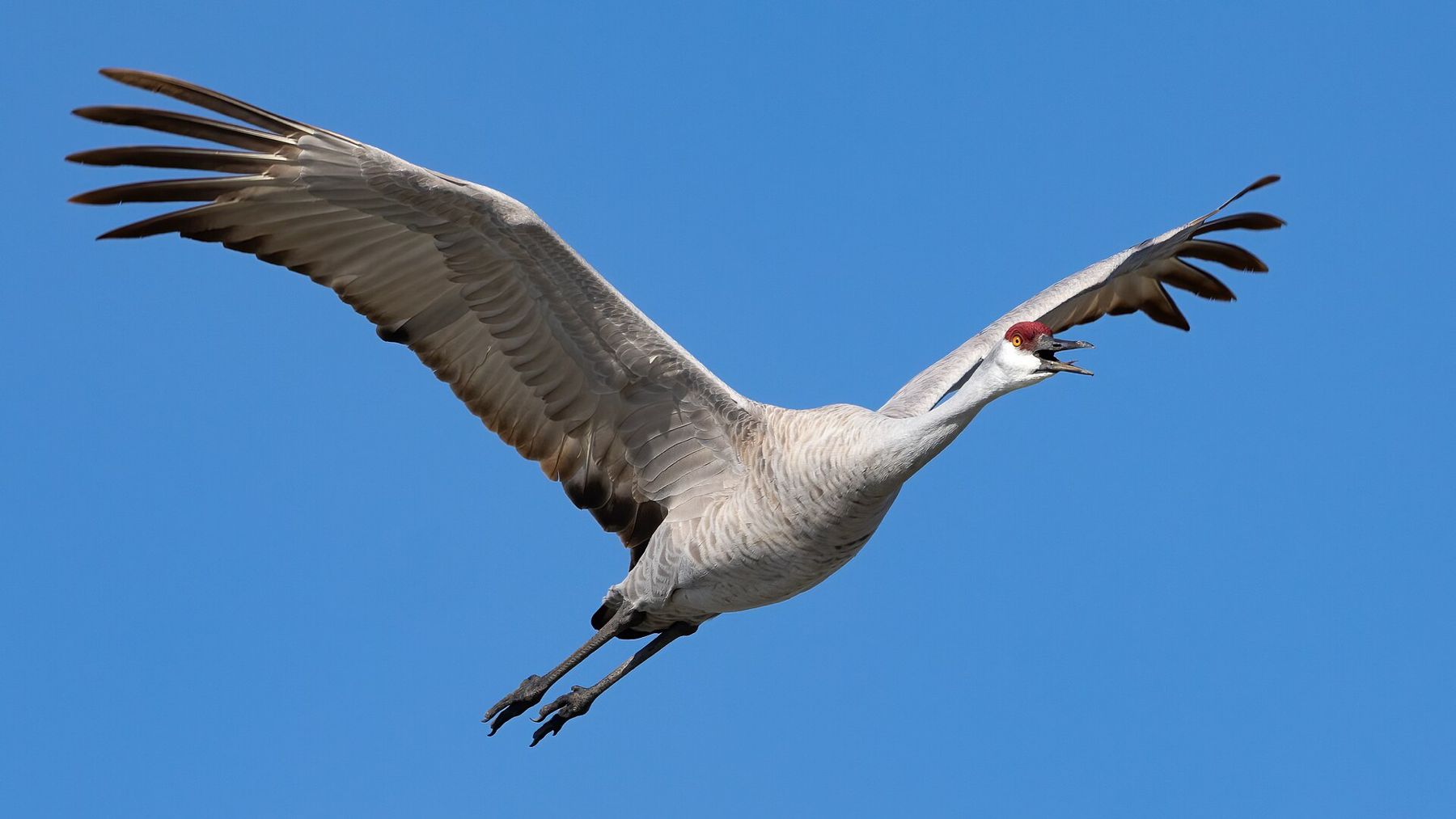
Sandhill cranes are tall, grey birds with long legs and necks and a patch of bare red skin on the crown. In spring many look rusty-brown, from staining their feathers with iron-rich mud. Their call is a loud, rolling bugle that carries for kilometres; the long, coiled windpipe of a crane works almost like a brass instrument.
Look for dancing. Pairs and individuals bow, leap into the air with wings spread, toss grass and sticks, and run in circles. Dancing is part of pair bonding, but cranes of all ages do it, sometimes apparently in response to excitement or disturbance. Family groups are also visible: young cranes from the previous summer travel with their parents, and you can often pick out a pair with one or two browner youngsters.
Keep an eye out for other birds. Huge flocks of snow geese pass through the region in early spring, and very rarely, a whooping crane appears among the sandhills. If you see one, report it to local authorities and keep your distance.
Practicalities and weather
March weather on the Great Plains can be anything from mild to bitterly cold and windy, sometimes in the same day. Dress for long periods standing or sitting still in the cold, with gloves, hat and warm boots. Kearney and Grand Island, both on the interstate, are the usual bases, with the larger airports at Omaha and Lincoln a few hours' drive to the east. Book accommodation early for peak weekends.
Plan at least two days if you can: one dusk and one dawn at the river, with the hours between spent driving the country roads to watch feeding and dancing. Binoculars matter more than a long lens here. A spotting scope is useful from bridges and platforms, where the roost may be several hundred metres away. On windy days, look for flocks sheltering in low fields, and on still evenings stay after sunset, when the calling from the river can go on long into the dark.
The crane gathering is one of several great migrations that make spring in North America so rewarding. Later in the season, in the forests of the southern Appalachians, the synchronous fireflies of the Smokies provide another kind of spectacle, and further south, the monarch butterflies leaving Michoacán begin their own journey north at around the same time the cranes are on the Platte.