Winter · Tromsø
Northern lights above Tromsø
Tromsø sits beneath the auroral oval, so the lights are often overhead in the dark months. The real challenge is cloud, cold and finding a dark sky.
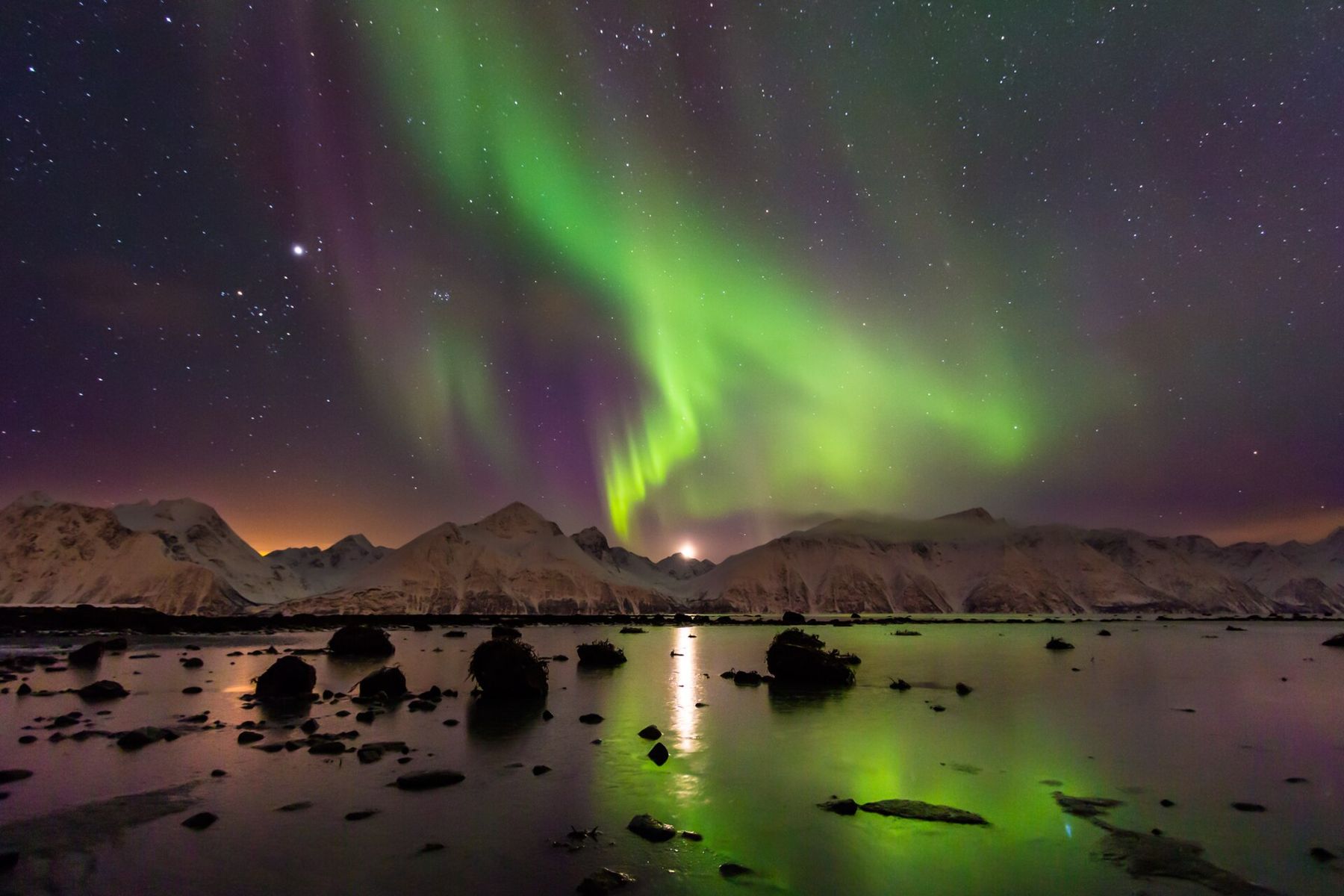
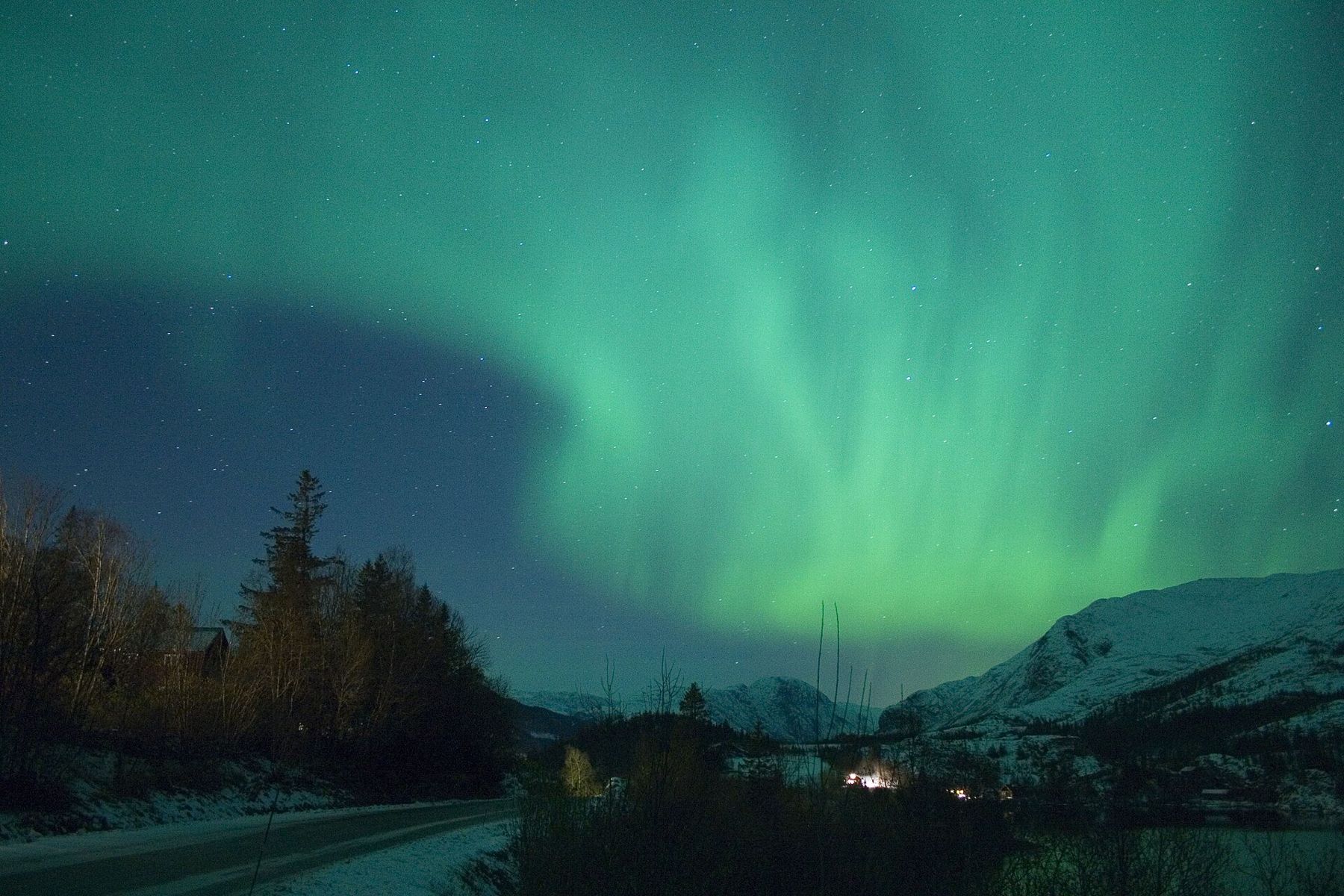
The aurora rarely arrives as the bright, fast spectacle of photographs. Over Tromsø it often begins as a pale grey-green arc low over the northern mountains, so faint you wonder whether it is cloud. Then the arc brightens and lifts, folds start to run along it, and within minutes a curtain may be moving across the whole sky. Twenty minutes later it can be gone, or it can return several times through the night.
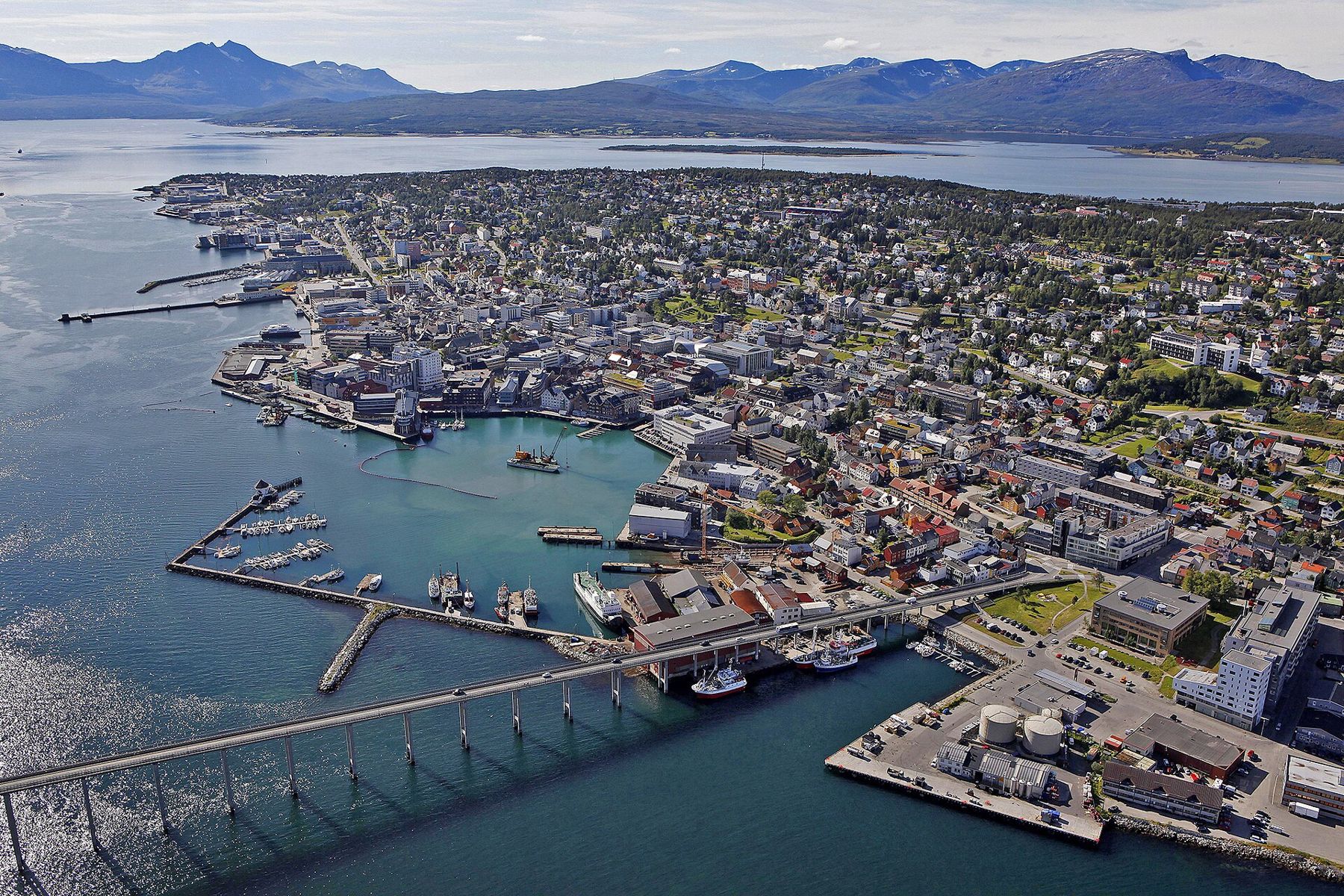
Tromsø, at almost 70 degrees north on an island in a fjord system in northern Norway, is one of the most accessible places on Earth to wait for that to happen. It has an airport, roads leading out into dark valleys, and a position that puts it beneath the auroral zone. What it cannot give you is a guarantee.
Why the lights appear here
The aurora is caused by charged particles from the Sun, carried on the solar wind, being channelled by Earth's magnetic field down into the upper atmosphere around the magnetic poles. There they collide with oxygen and nitrogen, which give off light. The common green comes from oxygen at around 100 to 250 kilometres up; rarer reds come from oxygen higher still, and pinks and purples at the lower edges of strong displays come from nitrogen.
These collisions happen mostly in a ring around each magnetic pole called the auroral oval. Tromsø lies beneath or close to the northern oval, which means that even moderate activity can put the aurora overhead or to the north, while places further south need a strong storm to see anything. The aurora is happening in summer too, but under the midnight sun the sky never gets dark enough to see it.
The dark season and realistic odds
The viewing season runs roughly from late August or September, when nights become properly dark again, until late March or early April, when they become too short. From late November to mid-January the sun does not rise above the horizon at all in Tromsø, a period known as the polar night. Days are blue twilight, and the sky can be dark from mid-afternoon.
The polar night gives the longest hours of darkness, but it is not necessarily the best time. Midwinter weather on this coast is often cloudy and stormy. The autumn and late-winter months, roughly September to October and February to March, give long enough nights with some chance of more settled weather, and there are suggestions that activity is statistically a little higher around the equinoxes. Treat that as a slight tilt in your favour, not a rule.
In practice, the single biggest factor in whether you see the aurora from Tromsø is cloud.
In practice, the single biggest factor in whether you see the aurora from Tromsø is cloud. Solar activity forecasts give a useful idea of how strong a display might be, but a modest display under a clear sky beats a strong one behind cloud every time. Plan several nights, not one, and give yourself flexibility to move.
Turn the page to JanuaryThe snow monkeys of JigokudaniGetting away from the light
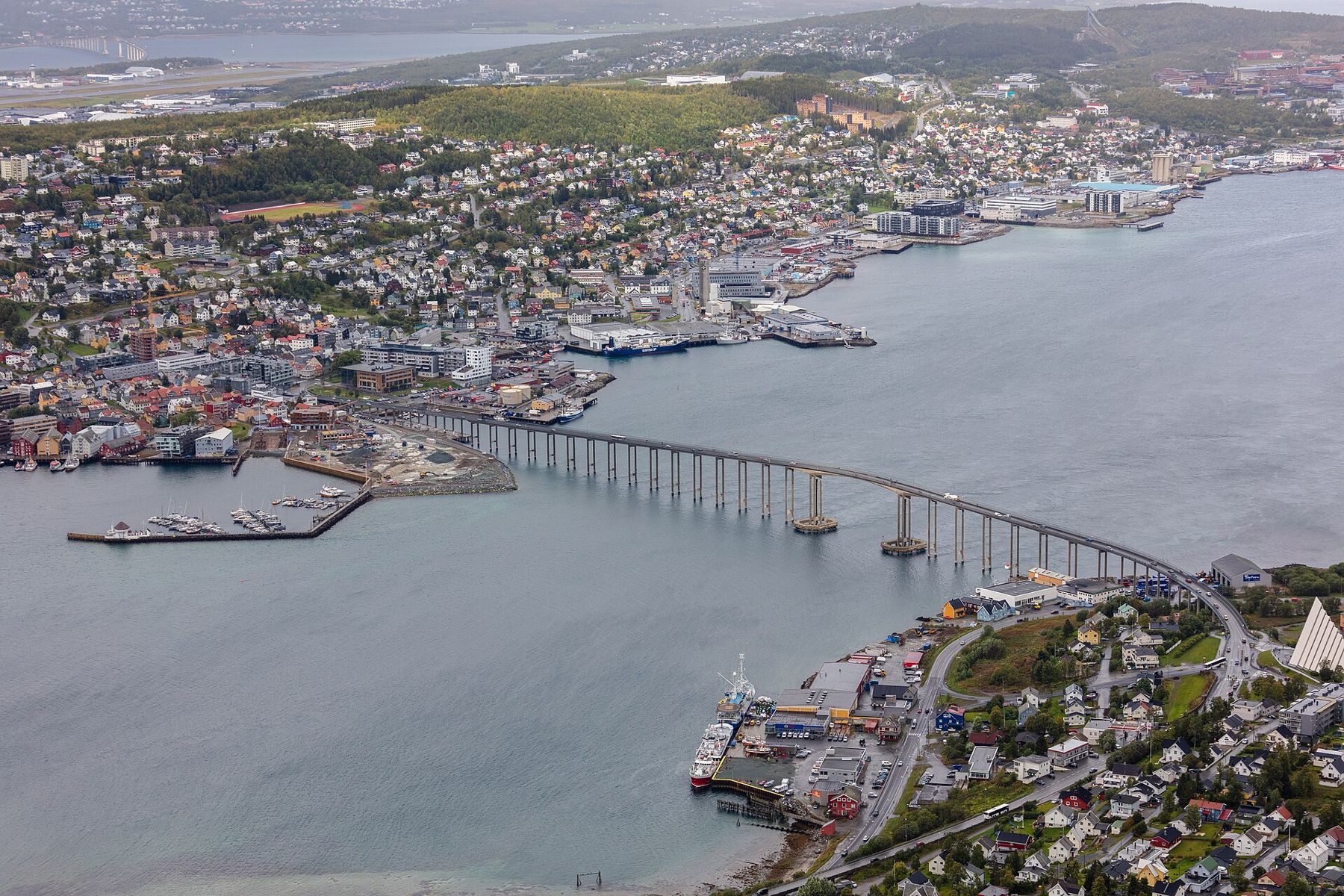
The town itself is bright. Street lights, the airport and the bridges all wash out fainter displays, though a strong aurora can be seen from the middle of town. To see the lights well, get out of town: a short drive across to the mainland or along the island coasts brings you to dark shores and valleys.
Because the coast is often cloudy, many aurora chasers look at weather maps and drive inland, where the climate is drier and skies clear more often. Valleys running towards the Swedish and Finnish borders can be clear when Tromsø is under cloud, but they are also much colder. The roads are winter roads: icy, dark and sometimes closed by snow or avalanche risk. Check road conditions before setting off, and if you are not used to driving in Arctic winter, go with someone who is.
When you stop, choose a proper parking place or lay-by, pull fully off the road and switch off your headlights. Respect private land and farm tracks. Let your eyes adapt to the dark for at least fifteen minutes, and use a red light so you do not lose that adaptation each time you check a camera setting.
Cold, kit and photography
Tromsø's coastal climate is milder than its latitude suggests, with town temperatures in midwinter often a few degrees below freezing. Waiting still for hours at night is a different matter, and inland valleys can be far colder, well below minus 20 degrees Celsius on clear nights. Dress as if you will be standing still in the wind for a long time, because you will be.
- Thermal base layers, a warm mid-layer, an insulated jacket and windproof outer layer.
- Insulated, waterproof boots with good grip, and ice grips for slippery paths.
- A warm hat, a neck gaiter, and thin gloves inside thick mittens.
- Spare batteries kept in an inside pocket, since cold drains them fast.
- A red headtorch and a flask of something hot.
For photographs, a tripod and a camera that allows manual settings make a large difference. A wide lens, an open aperture and exposures of a few seconds work for most displays; shorten them as the aurora brightens and moves faster. Many phones now have night modes that record the aurora well, often more clearly than the eye sees it. That colour difference is real: faint aurora often looks grey to human eyes, which see colour poorly in the dark, while the camera records green.
Moon, forecasts and patience
A full moon brightens the sky and hides fainter displays, but it also lights the snowy mountains, which can make for fine photographs during a strong aurora. Around new moon the sky is darkest. Neither should decide your dates on its own.
Daylight matters too. In the polar night there is little to do outdoors by day except walk the town in blue twilight, but by February the sun is back for several hours, the snow light is long and golden, and the days give you time to rest before a night out. That rhythm, sleeping late and staying out past midnight, suits most aurora trips better than trying to keep normal hours.
Check the cloud forecast first, then the aurora forecast. Look north early in the evening; a faint arc there is often the first sign. Be ready for long periods of nothing, and stay out for a while after a display fades, because activity often comes in waves. If you enjoy cold-weather wildlife as well, winter in Norway pairs naturally with other winter journeys, from the snow monkeys of Jigokudani to the monarchs in Michoacán.