Autumn · Hermanus
Southern right whales from the Hermanus cliffs
Each austral winter and spring, southern right whales come into Walker Bay to mate and calve close to shore. Hermanus lets you watch them from the cliff path without setting foot on a boat.
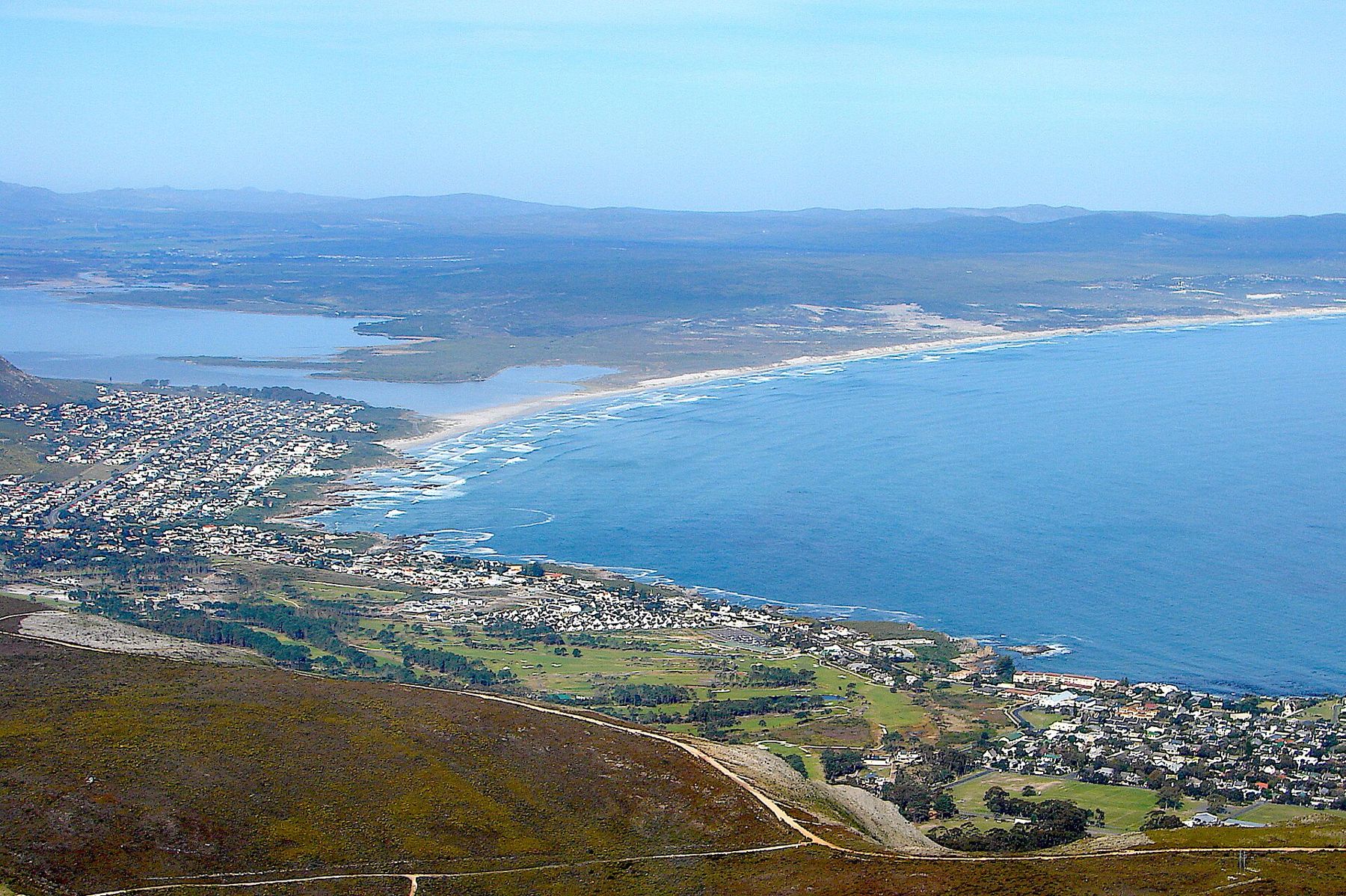
Hermanus is a small coastal town in South Africa's Western Cape, on the north shore of Walker Bay. From roughly June to November southern right whales come into the bay, sometimes close enough to the rocks that you can hear them breathe. The town has turned the whales into its identity, and with good reason. Few places in the world let you watch great whales this well from land.
Note the season. Hermanus is in the southern hemisphere, so the whale season runs through the austral winter and spring, the northern summer and autumn. The busiest months for whales are usually September and October, which in Hermanus is spring.
Why the whales come
Southern right whales (Eubalaena australis) spend the southern summer feeding in cold sub-Antarctic waters, where krill and copepods are plentiful. In winter they move north to sheltered coastal bays to mate and give birth. Calves are born in these shallow, calm waters, where the risk from predators and rough seas is lower, and stay close to their mothers for months, gaining weight before the long journey south.
The whales were heavily hunted in the past, which nearly wiped them out. They were called right whales because they were the right whale to hunt: slow, close to shore and buoyant once dead. Protection has allowed the population to recover, though the recovery has been uneven, and the number of whales in the bay varies widely from year to year.
What to look for
Southern rights are easy to tell apart from other large whales once you know the signs. They have no dorsal fin, broad, smooth backs and a blow that splits into a V shape, seen best from directly behind or in front. On their heads are rough patches of thickened skin called callosities, often pale with tiny crustaceans, which form a pattern unique to each whale and are used to identify individuals.
- Breaching: a whale launches much of its body out of the water and falls back with a crash.
- Lobtailing: slapping the tail flukes hard on the surface.
- Sailing: holding the tail up out of the water, sometimes for minutes, as if catching the wind.
- Spyhopping: rising vertically so the head clears the surface.
Nobody is quite sure why whales breach. It may be communication, a way of removing parasites, play or simply a display of fitness, and probably it is a mix of all of these. What is clear is that breaching and lobtailing are often contagious: when one whale starts, others nearby frequently join in.
Turn the page to AugustThe Great Migration in the Masai MaraThe cliff path
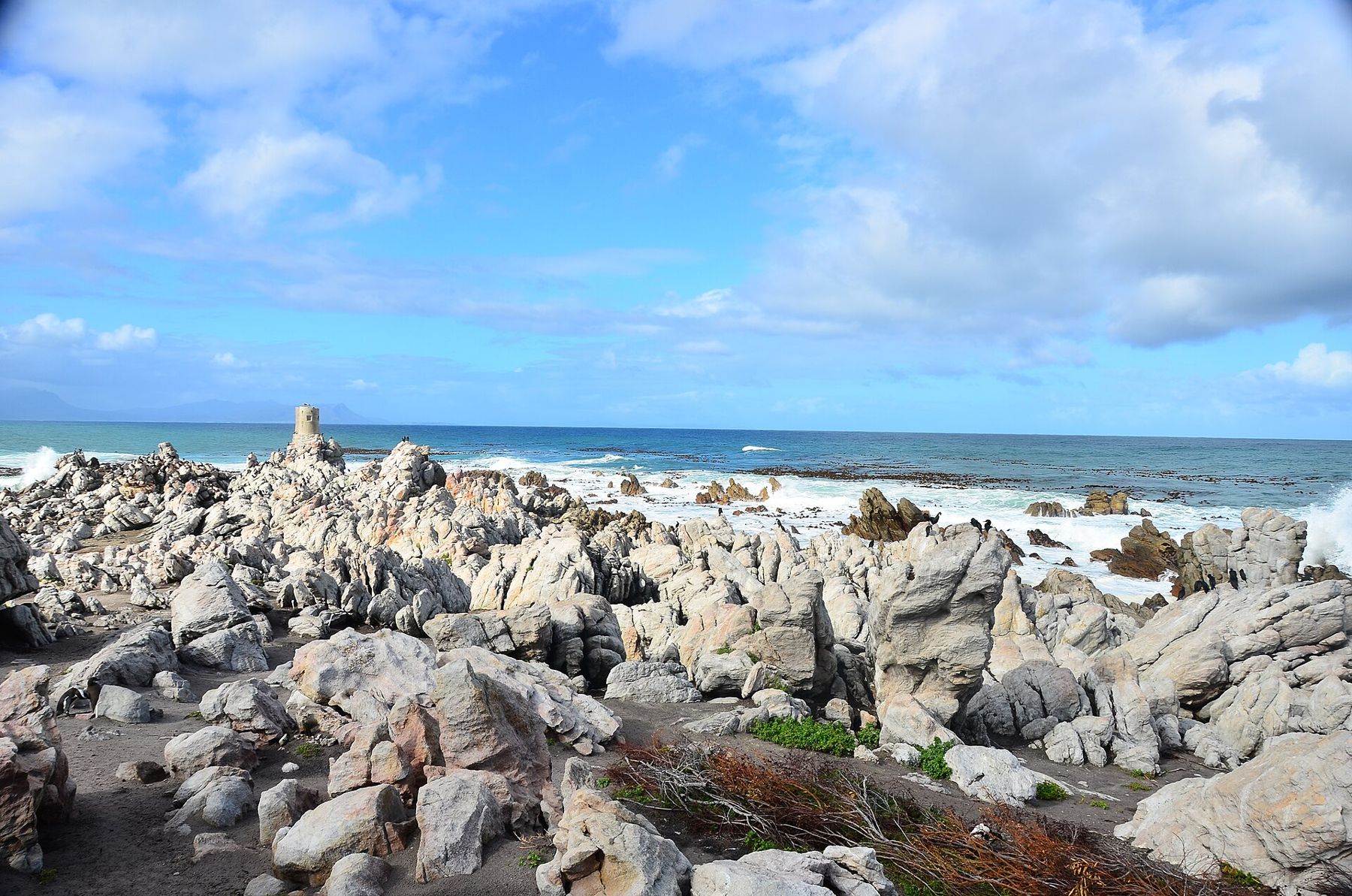
The cliff path runs for several kilometres along the rocky shore of Hermanus, from the new harbour past the old harbour and the town centre towards the beaches to the east. Benches and viewpoints are spaced along it, and in good years you may see whales from almost any point. The old harbour area, with its stone breakwater and slipway, is the natural centre of the town and one of the easiest places to start.
The path also passes rock pools, fynbos and seabird roosts. Cape cormorants, an endangered seabird of southern African coasts, often gather on the rocks below, and dassies, rock hyraxes, bask on the boulders. Walk early or late in the day for the best light and the calmest water.
Reading the bay
Whale-watching from the shore is a matter of patience and technique. Scan the water slowly, section by section, with binoculars, looking for blows, a dark back or splashes. Wind is the enemy. A calm sea shows everything, while whitecaps hide blows and backs. Mornings are often calmer than afternoons, though Walker Bay has its own moods and no rule holds every day.
Mothers and calves often rest quietly in shallow water close to shore, surfacing slowly. Mating groups, with several males around a single female, are noisier, with rolling, flippers waving and much splashing. Watching from height lets you see whales underwater when the light is right, as long pale shapes below the surface.
Boat-based whale watching is also possible. Numbers of operators and rules on approach distances are tightly controlled, and only permitted boats may approach whales. Check current arrangements locally before you go, and choose an operator that follows the regulations.
Practical notes
Hermanus is about two hours' drive from Cape Town by the coastal road, depending on route and traffic. Weather in the Western Cape spring is changeable: warm sun, cold wind and rain can all come in a day. Bring a windproof jacket, a hat and sun protection, and comfortable walking shoes for the cliff path.
Other places around Walker Bay offer good views too, including the cliffs at De Kelders on the far side of the bay. The whales move around, and if they are not in front of Hermanus, they may be somewhere nearby.
Other marine life shares the bay. Bottlenose and common dolphins pass through in pods, Cape fur seals hunt along the shore, and humpback whales and Bryde's whales are seen offshore from time to time. African penguins, another endangered seabird, live further along the coast. A slow walk on the cliff path with binoculars is rarely wasted, even on a day with few whales.
Whales in the calendar
Hermanus belongs to a family of coastal whale gatherings. In the northern winter, gray whales in the Baja lagoons give birth in sheltered waters on the other side of the world. In the northern autumn, the red deer rut in Scotland marks the same urge to breed, played out on land with stags instead of whales.