Winter · Michoacán
Monarch butterflies in the Michoacán forests
Each winter millions of monarchs hang in dense orange clusters from the fir trees of central Mexico, waiting out the cold on a handful of high mountain ridges.
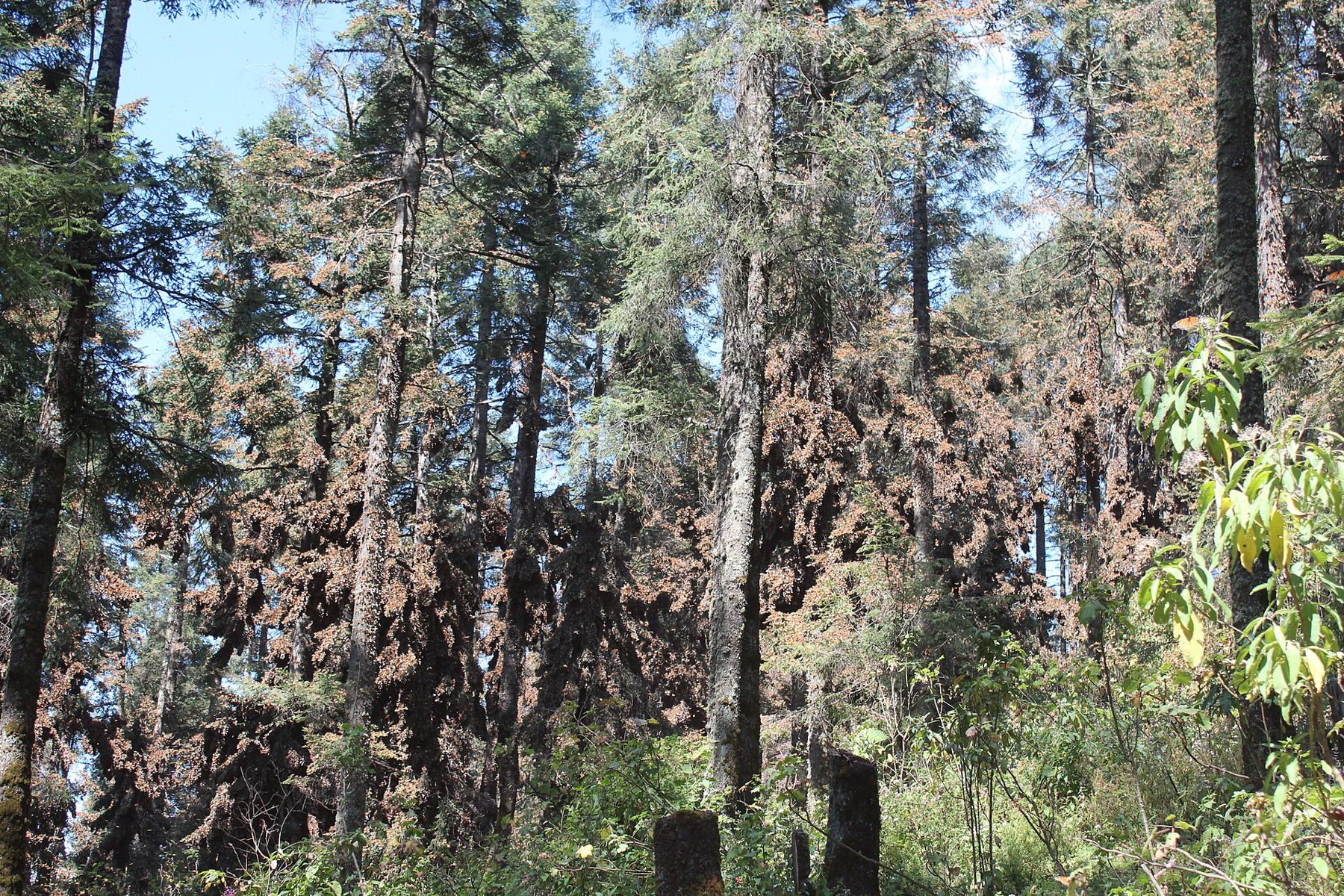
On a cold morning in the high forest of eastern Michoacán, the fir trees look wrong. Their branches sag, their trunks are crusted with something grey-brown, and the shade underneath is completely still. Then the sun clears the ridge, a few patches of the crust turn orange, and the first butterflies drop off the trees and begin to fly. By midday on a warm day the air between the trunks can be full of them.
These are monarch butterflies, Danaus plexippus, from the eastern population that breeds across the United States and southern Canada. Every autumn the last generation of the year flies south to a small group of mountains in central Mexico, where it spends the winter packed into colonies on a few hectares of forest. Watching them is one of the quietest wildlife experiences anywhere, and it asks the same of you.
Why the butterflies come to these mountains
The monarchs that arrive in Mexico in late October and November are not the ones that left Mexico the previous spring. Several short-lived summer generations come between them. The autumn generation is different: its members do not breed on the way south, they live for many months instead of a few weeks, and they find their way to a place none of them has seen before.
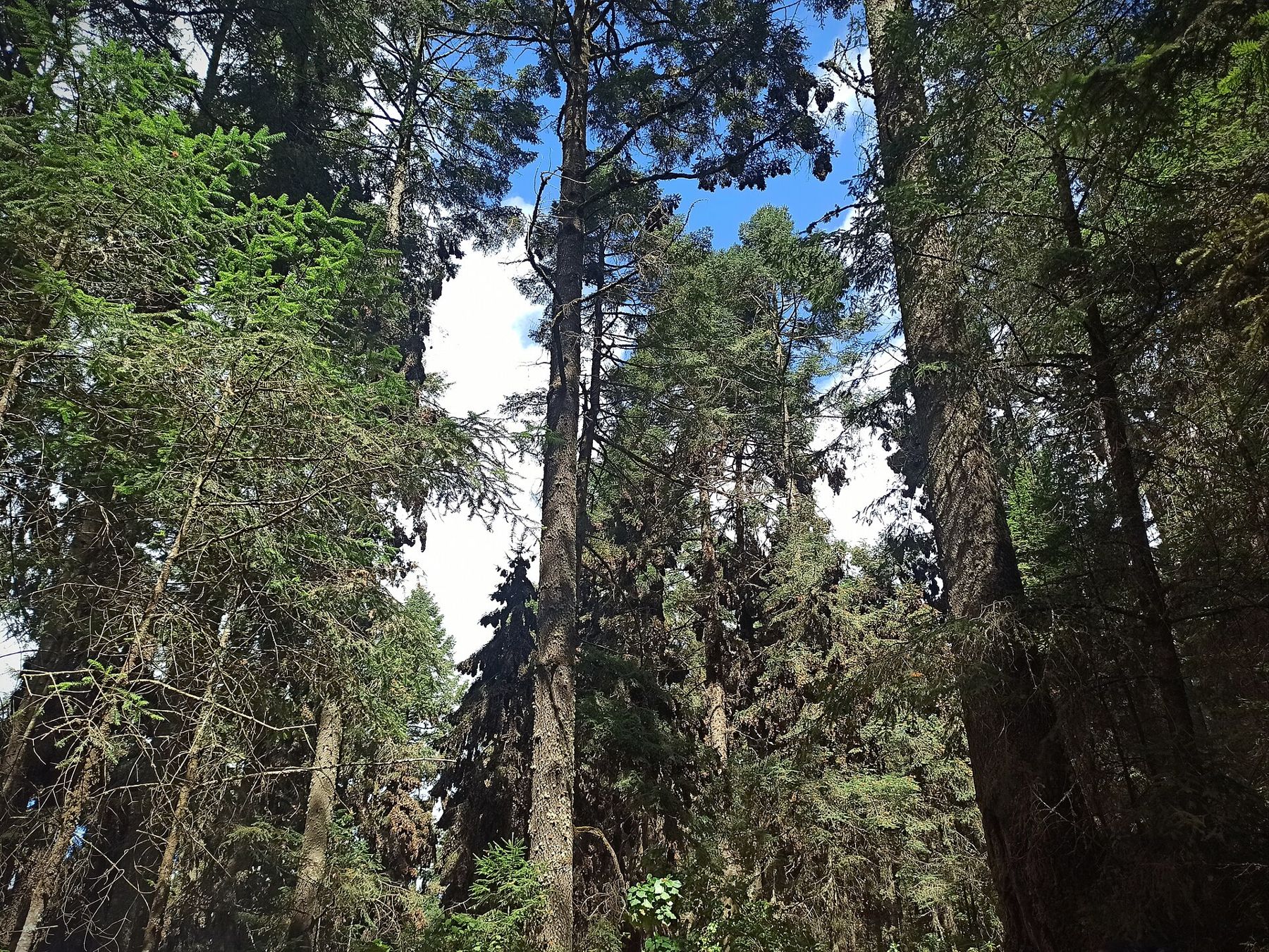
What they find is the oyamel fir forest, Abies religiosa, growing at roughly 3,000 metres on the ridges of the Trans-Mexican Volcanic Belt. The forest makes a microclimate that suits a resting butterfly. It is cool enough that the insects stay inactive and burn little of the fat they carried south, but the dense canopy acts like a blanket, keeping off the worst frost and the rain. Clustering helps too: tens of thousands of bodies packed onto one branch shelter each other.
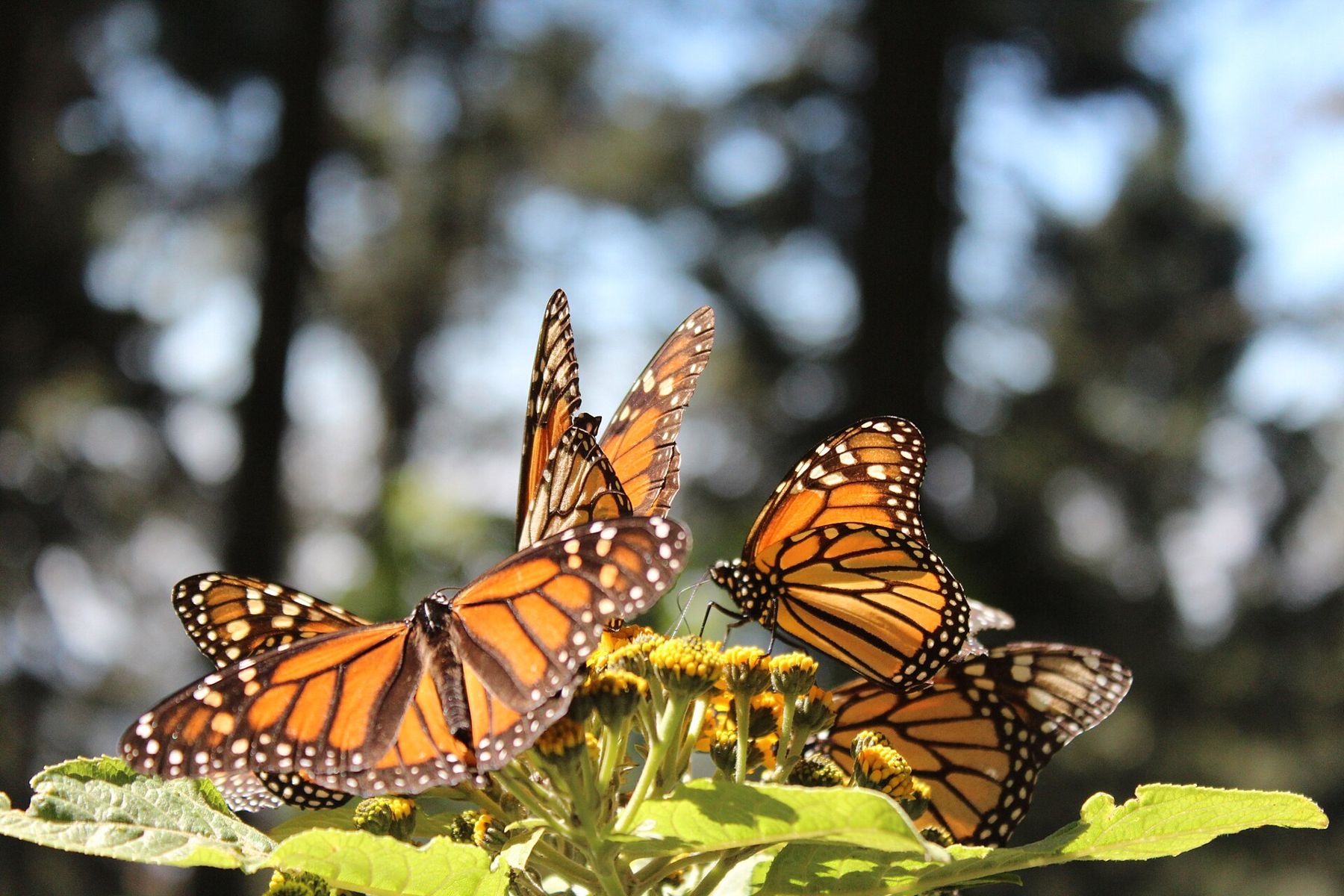
The colonies lie within the Monarch Butterfly Biosphere Reserve, which spans parts of Michoacán and the State of Mexico and is a UNESCO World Heritage Site. The forest is also home to communities and ejidos who manage much of the land, and visiting is arranged through them. The butterflies' survival depends on the forest staying intact, which is why entry is controlled, trails are fixed, and the sanctuaries open only in the winter season.
El Rosario, Sierra Chincua and the other sanctuaries
Several sanctuaries open to visitors each season, and which ones host the largest colonies changes from year to year. The butterflies do not return to the exact same trees; they settle where conditions suit them that winter, and colonies often shift a little downhill as the season goes on and the weather warms.
El Rosario, above the village of the same name near Ocampo and Angangueo, is the best known and usually the busiest. The trail is long and steep, with steps in places, and the colony can sit well up the mountain. Sierra Chincua, a little to the north near Angangueo, has a gentler, more open approach through meadow and forest, and is often quieter. Other sanctuaries open in some seasons in Michoacán and the State of Mexico. Ask locally, or check before you go, which sites are open and where the butterflies are concentrated that winter.
Turn the page to FebruaryGray whales in the Baja lagoonsAccess to most sanctuaries combines a road journey to a parking area, a ticket arranged by the local community, and a walk or a horse ride up a forest trail with a local guide. Fees, opening days and guiding arrangements are set locally and change; confirm them close to your trip. Travel advice for the region also changes, so read current official guidance before planning your route.
Walking up to a colony
The altitude is the first thing you notice. Parking areas are already high, and the trails climb higher, so even fit walkers breathe hard. Go slowly, drink water and give yourself an extra day in the region if you are coming from sea level. Horses are available at many trailheads for part of the way, but the final stretch to the colony is usually on foot.
When you reach the colony, a rope or a guide marks how close you can go. Look up. What first seems like dead foliage or lichen on the firs is butterflies, so many that branches bend under them. Look closely and you can pick out individuals, wings closed to show their pale undersides, which is why the clusters look grey-brown rather than orange.
What first seems like dead foliage or lichen on the firs is butterflies, so many that branches bend under them.
As the air warms past a certain point, the butterflies begin to open their wings and bask, and the clusters change colour. On a sunny day they drop from the trees and fly down to streams and damp ground to drink, then return. Listen in the quiet: with thousands in the air at once, the sound of their wings is a soft, dry rustle, like light rain on leaves.
How to behave among the clusters
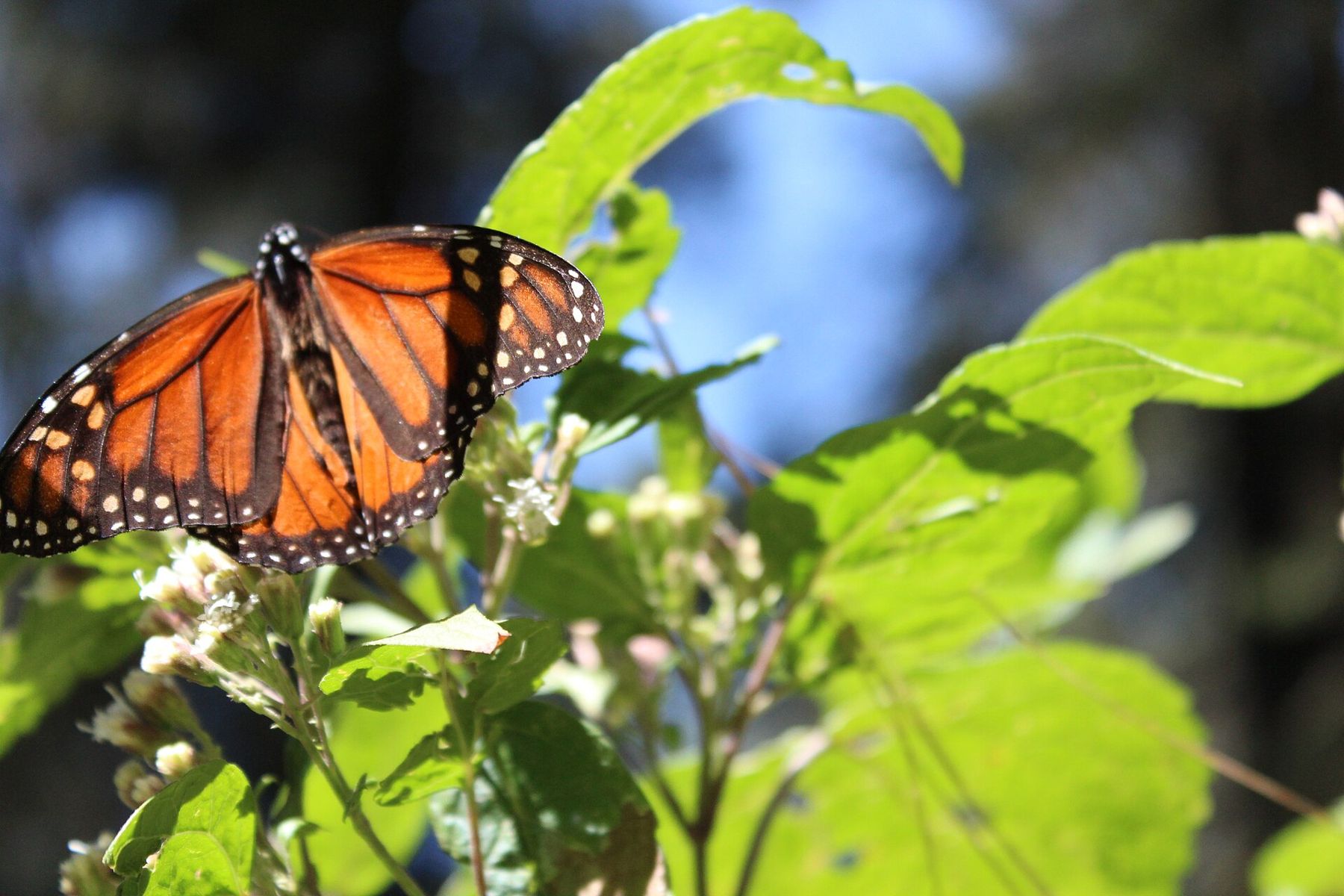
The rules at the sanctuaries exist because the butterflies are vulnerable while they rest. Each one disturbed into flight on a cold day uses energy it cannot replace until spring.
- Stay behind the ropes and on the marked trail. The forest floor can be covered with butterflies on cold mornings.
- Walk carefully and watch where you put your feet. A chilled monarch on the ground is often alive and will recover in sunshine.
- Do not touch, pick up or shake anything. Leave fallen butterflies where they lie.
- Keep your voice low and phones silent. Guides ask for quiet, and the experience is better for it.
- No drones. Follow your guide's directions on flash photography and on how long groups stay.
Smoking and food are usually restricted near the colonies. Take all litter back down with you.
Timing, altitude and weather
The first monarchs arrive in late October and early November, around the time of the Day of the Dead. Colonies settle through November and December, and the sanctuaries generally open to visitors from around late November until March, though the dates vary each season. January and February are often the most rewarding months: the colonies are well established, and on warm, sunny afternoons activity peaks. In late February and March, mating becomes common and the butterflies begin to leave, heading north to lay eggs on milkweed in Texas and beyond, a relay that continues through the summer much as the Smokies' fireflies keep their own short season.
Weather decides what you see on the day. On cold or cloudy days the clusters stay closed and still, which is impressive in its own way but quiet. On bright days after about midday, the forest fills with flying butterflies. Mornings at this altitude are cold, often near freezing, and afternoons can be warm in direct sun, so dress in layers. Population size varies widely between years, and the area occupied by the colonies is measured each winter; numbers in any given season are not guaranteed.
The monarch's journey is one of several great seasonal movements on this continent that you can plan around, along with the sandhill cranes on the Platte River in March and the gray whales in the Baja lagoons through the same winter months. The butterflies are the smallest and in some ways the most remarkable of them: a few grams of insect that cross a continent once, and find a mountain forest they have never seen.