Spring · England
Bluebell woods in an English spring
For a few weeks each spring, before the trees come fully into leaf, the floors of England's old woods turn violet-blue with native bluebells and fill with their scent.
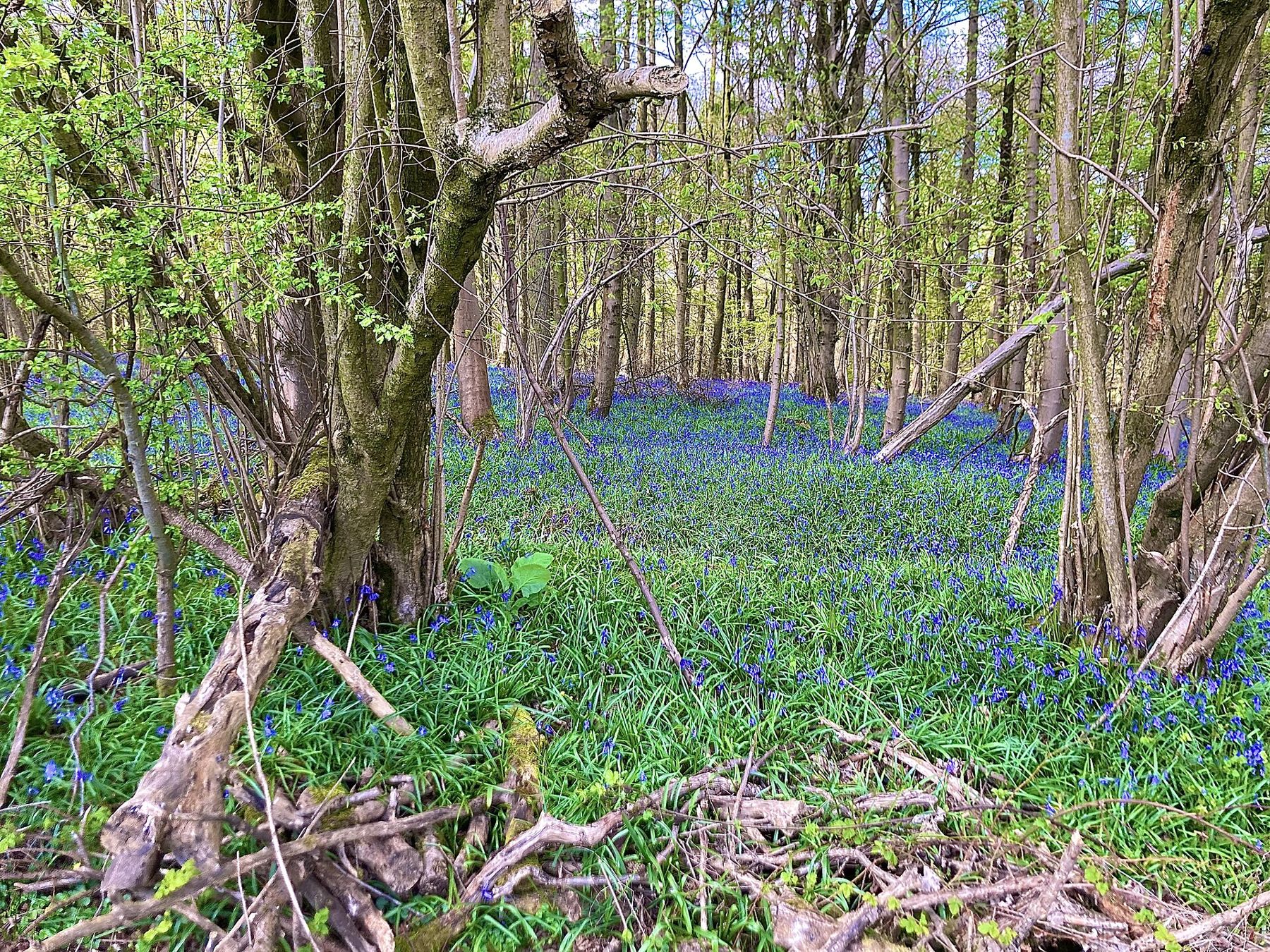
The first impression is of colour, a blue haze under the trees that looks almost unreal in photographs and slightly unreal in life. The second is scent, sweet and faint, strongest on a warm, still morning. Then you notice the sound: bumblebees moving from flower to flower, birdsong overhead from a canopy that is not yet fully closed.
A bluebell wood in full flower is one of the most familiar sights of spring in Britain, and it is also more particular than it looks. The flowers depend on old woodland, on timing, and on not being walked on.
A plant of old woods
The native bluebell, Hyacinthoides non-scripta, grows across western Europe, but Britain holds an unusually large share of the world's population. Dense carpets form in woods with a long, unbroken history, and the plant is often used as one of the indicators of ancient woodland, meaning woods that have been wooded continuously for several centuries.
Bluebells spread slowly. They grow from bulbs, and seed falls close to the parent plant, so a dense carpet can represent a very long period of undisturbed ground. Bluebells also grow in hedgerows and on open hillsides and cliffs in the west, where they are often survivors of woodland long since cleared.
When they flower
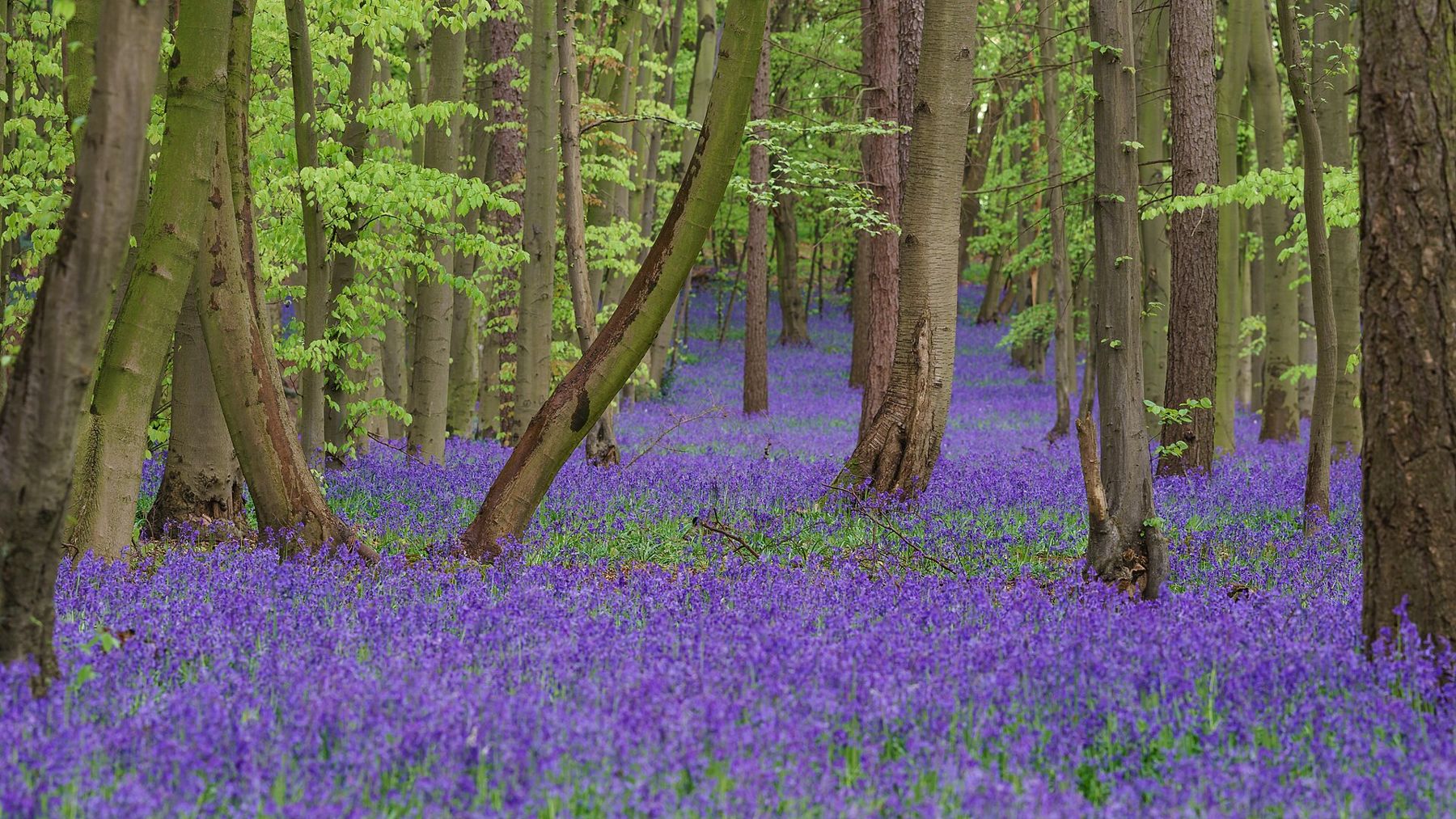
Bluebells flower in spring for a reason. The woodland floor gets most light before the canopy above closes, so the plant pushes up leaves in late winter, flowers from around mid-April, and finishes its year's growth before the trees fully shade it. By midsummer the leaves have died back and the bulbs rest underground until the next year.
Flowering usually peaks from late April into early May across much of England, earlier in the south and in warm springs, later in the north and in cold ones. A warm March can bring them forward by a week or two; a cold spell can hold them back. Each wood also differs with its aspect and shade. Local reports in spring are the best guide, and if the first flowers are showing, the best week is usually close.
Turn the page to FebruaryDesert wildflowers in Anza-BorregoNative or Spanish
The Spanish bluebell, Hyacinthoides hispanica, was introduced to British gardens and has escaped into the wild, where it hybridises with the native plant. In some places, hybrids are common. Telling them apart takes a closer look:
- Native bluebells droop at the top of the stem, with flowers hanging mostly on one side.
- Their flowers are narrow, deep violet-blue tubes with tips that curl back.
- The pollen inside native flowers is cream-coloured.
- Spanish bluebells stand more upright, with flowers all round the stem, wider bells, and pollen that is usually blue.
- Native bluebells have a stronger, sweeter scent.
Hybrids show a mix of these features. Never dig up or move bluebells in the wild: native bluebells are protected by law, and taking them is an offence.
The trouble with trampling
A bluebell's leaves are its whole year's food supply. They photosynthesise for only a few weeks in spring, storing energy in the bulb. If a leaf is crushed, it cannot do that, and the bulb weakens. Repeated trampling over several springs can thin out a carpet, and recovery takes years.
This is why paths in bluebell woods are not just a suggestion. A single narrow desire line through the flowers, made by people stepping off the path for a photograph, quickly widens, and patches of bare earth spread from it.
A bluebell's leaves are its whole year's food supply.
- Stay on the established paths, however narrow.
- Do not walk into the flowers for a picture; a longer lens or a lower angle does the same job.
- Keep dogs on a short lead and on the path.
- Do not pick the flowers.
Finding a wood
Bluebell woods are found across England, from the Chilterns and the Weald in the south-east to the woods of Worcestershire, Gloucestershire and the North. Many are in country parks, nature reserves, or estates and woodland open to the public. Local councils, conservation charities and woodland groups often publish lists of good spots in spring.
Small local woods can be as good as famous ones and are often far quieter. Ancient woods along valley sides and on old estate land are good places to start. Look for woods with coppice, hazel and oak, where the canopy is not too dense.
Coppicing, the old practice of cutting hazel and other trees to the base every few years, lets light reach the woodland floor, and bluebells often flower most densely in the seasons after a cut. Beech woods, with their smooth grey trunks and open floors, can produce some of the most even carpets. Woods on clay and loam usually do better than those on thin, dry soils.
Light, weather and company
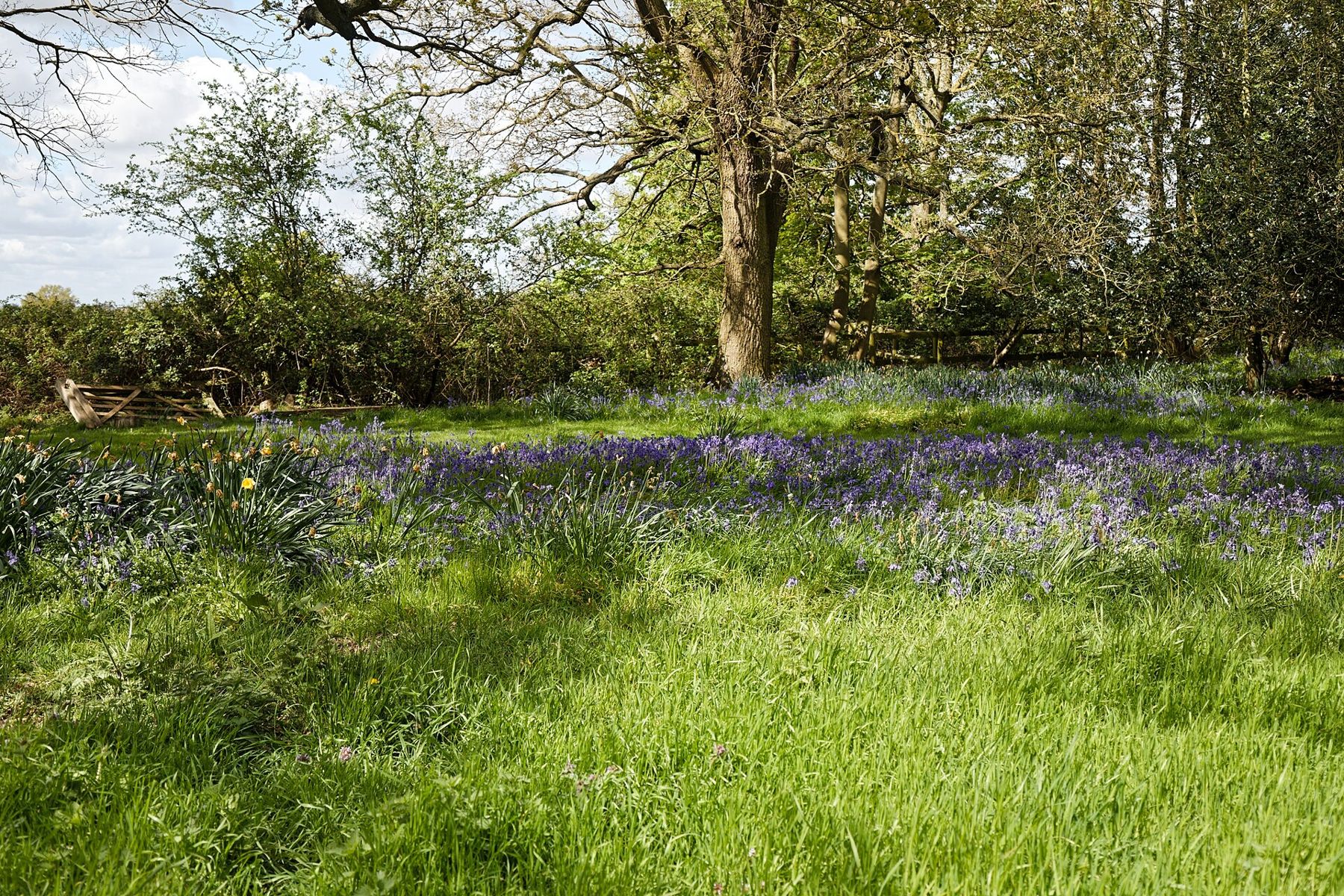
The colour of bluebells is hard to photograph. Bright sun makes it look washed-out and patchy; soft light under thin cloud, or early and late in the day, brings out the blue. A wood in the hour after rain, with the leaves still dark and wet, can be at its most intense.
Bluebells rarely flower alone. Look for wood anemones, early purple orchids, wild garlic and yellow archangel, and listen for blackcaps and chiffchaffs newly back from Africa. Spring on the Welsh coast brings its own colour, and in May the island of Skomer, home to the puffins of Skomer Island, is covered with bluebells and red campion. Across the Atlantic, desert springs follow very different rules, as the wildflowers of Anza-Borrego show.