Autumn · Engadin
Golden larches in the Alps
In late autumn the larch forests of the high Alpine valleys turn a deep, glowing gold. A guide to the Engadin and similar valleys, when the colour peaks and what to watch for.
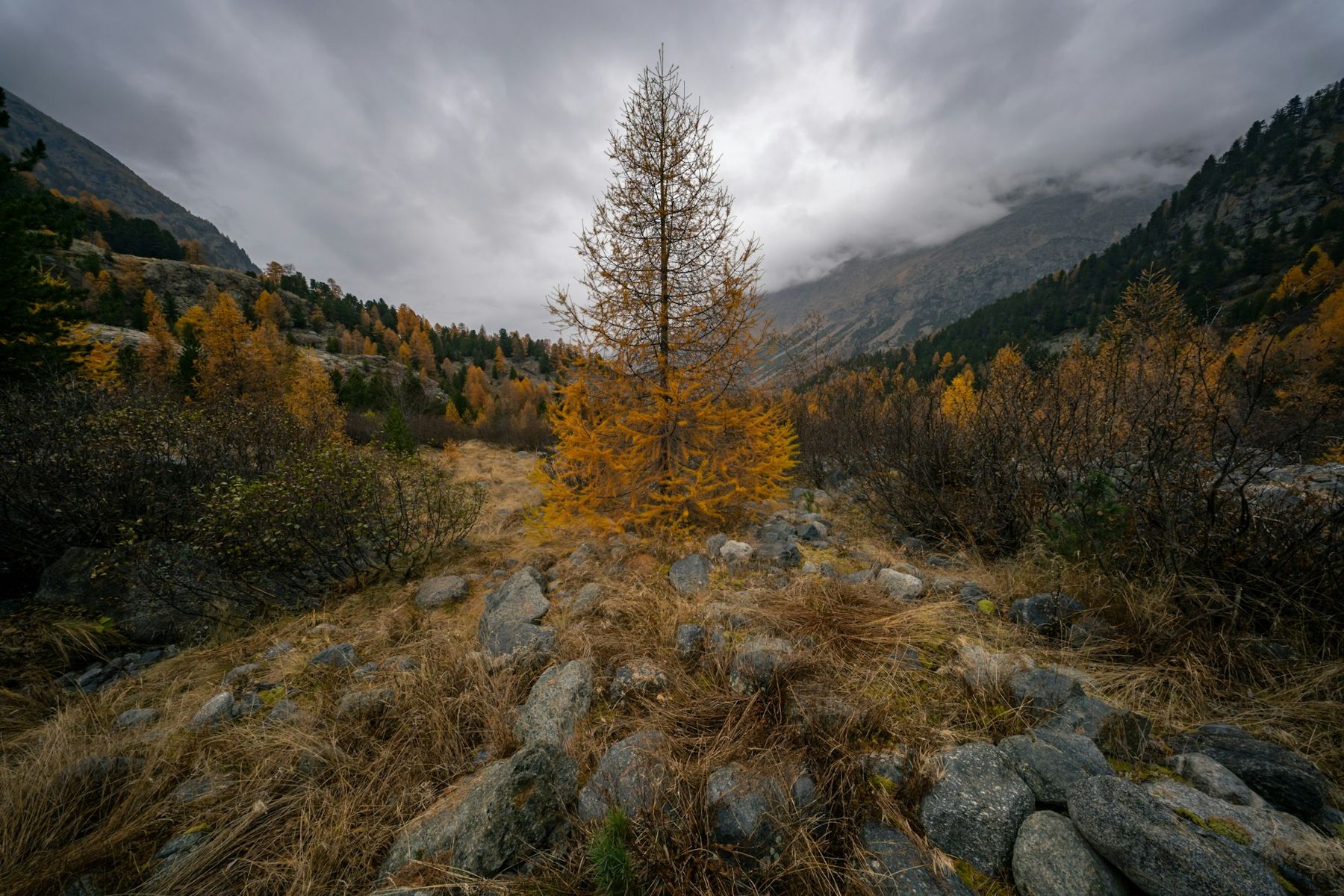
Most conifers keep their needles all year. The larch does not. European larch (Larix decidua) is a deciduous conifer, and in autumn its soft needles turn from green to yellow, then to a deep, glowing gold, before they fall. In high Alpine valleys where larch forests cover the slopes, the effect is extraordinary: whole mountainsides light up just as the first snow arrives on the peaks above.
Why larches turn
Larches grow in harsh conditions, up to the tree line in the Alps, where winters are long and cold and summers short. Shedding needles in autumn helps them survive winter: they lose less water when the ground is frozen and are less likely to be damaged by heavy snow. In spring, new needles grow quickly, a fresh, bright green.
The colour change happens as days shorten and temperatures fall. The trees break down chlorophyll and draw nutrients back into the branches, revealing the yellow pigments beneath. Weather affects the timing and quality of the colour. A sunny, calm autumn gives a long, rich display, while early storms or strong wind can strip the needles in days.
The Engadin
The Engadin is a long, high valley in the canton of Graubünden in eastern Switzerland, following the River Inn. The Upper Engadine, around St. Moritz, Pontresina and Sils, is known for its chain of lakes and wide valley floor, framed by peaks and slopes covered in larch and Swiss stone pine. The stone pine, or arolla pine, stays dark green, and its dark crowns among the golden larches give the slopes their characteristic look.
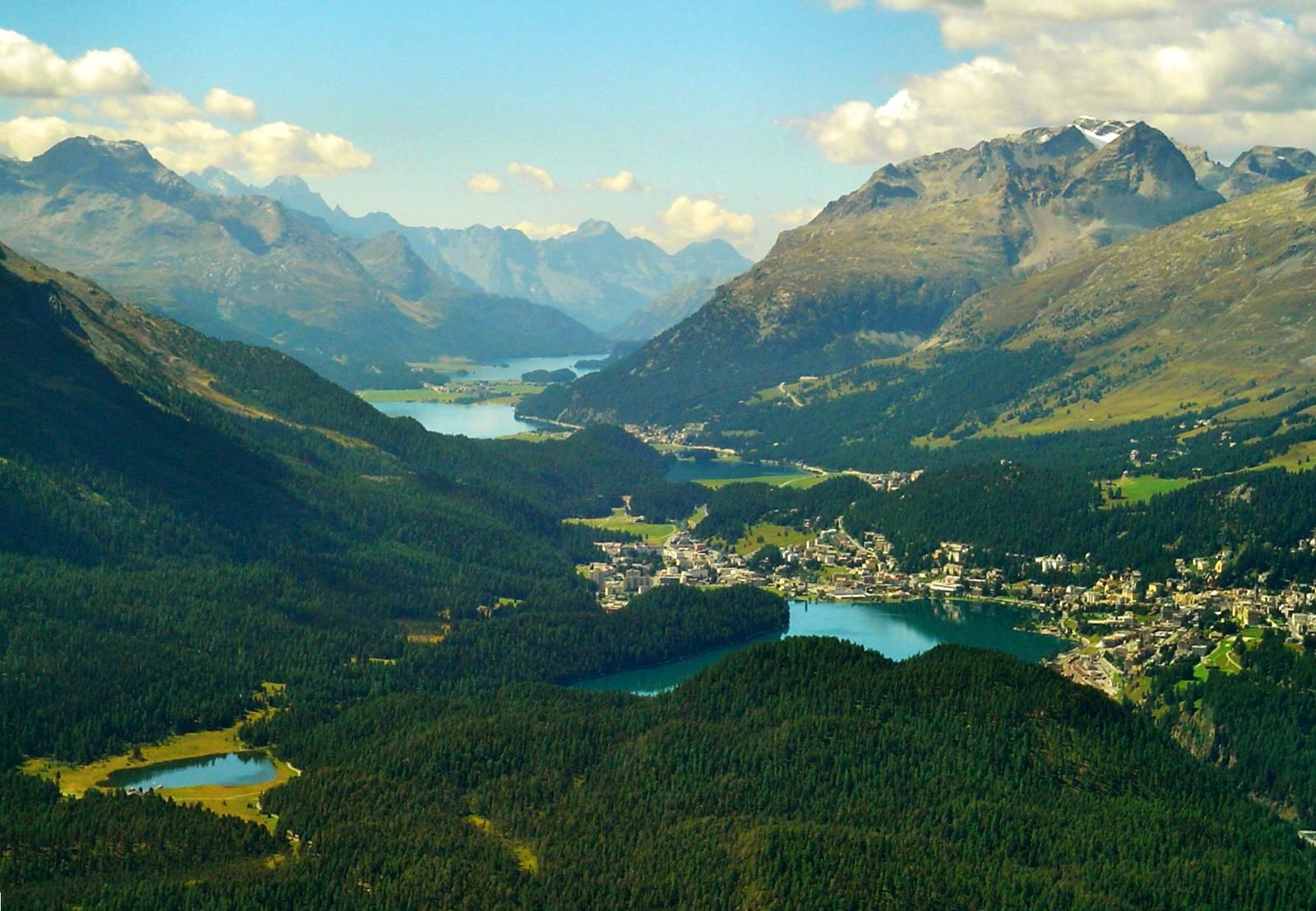
The colour usually peaks around mid to late October, though it varies with altitude and the year. The lower slopes may still be green when the higher ones are gold, and the reverse late in the season. A clear day after the first light snowfall, with gold larches, white peaks and blue lakes, is the classic Engadin autumn scene.
Lakes and light
The lakes of the Upper Engadine change the scene completely. On still mornings the larches reflect in the water of Sils, Silvaplana and St. Moritz, and the valley floor holds mist that burns off as the sun clears the ridges. The Maloja wind, which blows up the valley from the southwest on many afternoons, ruffles the lakes and can bring cloud over the pass, so mornings are usually best for calm water and reflections.
Turn the page to SeptemberAutumn colour in VermontWhere to walk
Many trails lead through larch forest in the Engadin. Side valleys such as Val Roseg and Val Fex are popular for walking, and both have larch woods along the way. Higher viewpoints give a sense of the whole valley. In the Lower Engadine, the Swiss National Park, near Zernez, offers marked trails through mountain forests, though rules there are strict: stay on paths, and no dogs.
Similar larch landscapes are found elsewhere in the Alps, including valleys in the Valais, Aosta Valley, South Tyrol and the Dolomites. The timing is broadly similar, from early to late October depending on altitude and weather.
The larch also has a long history in Alpine life. Its wood is dense, resinous and resistant to rot, and it has been used for centuries for roof shingles, balconies, fences and water pipes. Many old farmhouses and barns in the high valleys are built partly from larch, and the weathered silver timber on old buildings is often the same species glowing gold on the slopes above. Larch meadows, where the trees are spaced out above grazing land, are a traditional landscape in parts of the Alps, combining timber and pasture.
Early snow and the between season
Late autumn in the Alps is a between season. Many cable cars, mountain huts and some hotels close for a few weeks after the summer season and before winter. Check what is open before you plan, especially if you want to use lifts to reach higher trails.
The quiet has its own rewards. With fewer people on the trails, wildlife is easier to see, the villages are calm and the light is low and golden for much of the day. Late October can feel like the valley exhaling between two busy seasons, which suits the larches well.
Snow can arrive at any time in October, and higher paths may become icy or snow-covered. Weather changes quickly in the mountains. Carry warm layers, a waterproof jacket, gloves and a hat, and sunglasses, as the light can be strong at altitude, especially with snow. Check weather and trail conditions before setting out, and turn back if conditions become difficult.
Practical notes
The Engadin is easy to reach by public transport. Trains run into the valley through long tunnels and over high passes, and buses connect villages. The Albula and Bernina railway lines, which climb over high passes into the valley, are famous in their own right.
- Visit midweek if you can; weekends can be busier on popular trails.
- Start early for the best light and calm air on the lakes.
- Bring binoculars; chamois and red deer can be seen on the slopes in autumn.
- Respect hunting seasons and any local signs on trails.
The larches in the calendar
The golden larches are one of the last great colour shows of the northern autumn. Across the Atlantic, Vermont's autumn colour peaks a little earlier. In the same weeks, the red deer rut fills the Scottish glens with the sounds of stags, and red deer in the Alps go through their own rut too. After the needles fall, the larch forests wait, bare and silver, for the snow.