Winter · Baja California Sur
Gray whales in the Baja lagoons
Every winter, gray whales swim thousands of kilometres from Arctic feeding grounds to the warm, shallow lagoons of Baja California Sur to give birth and raise their calves.
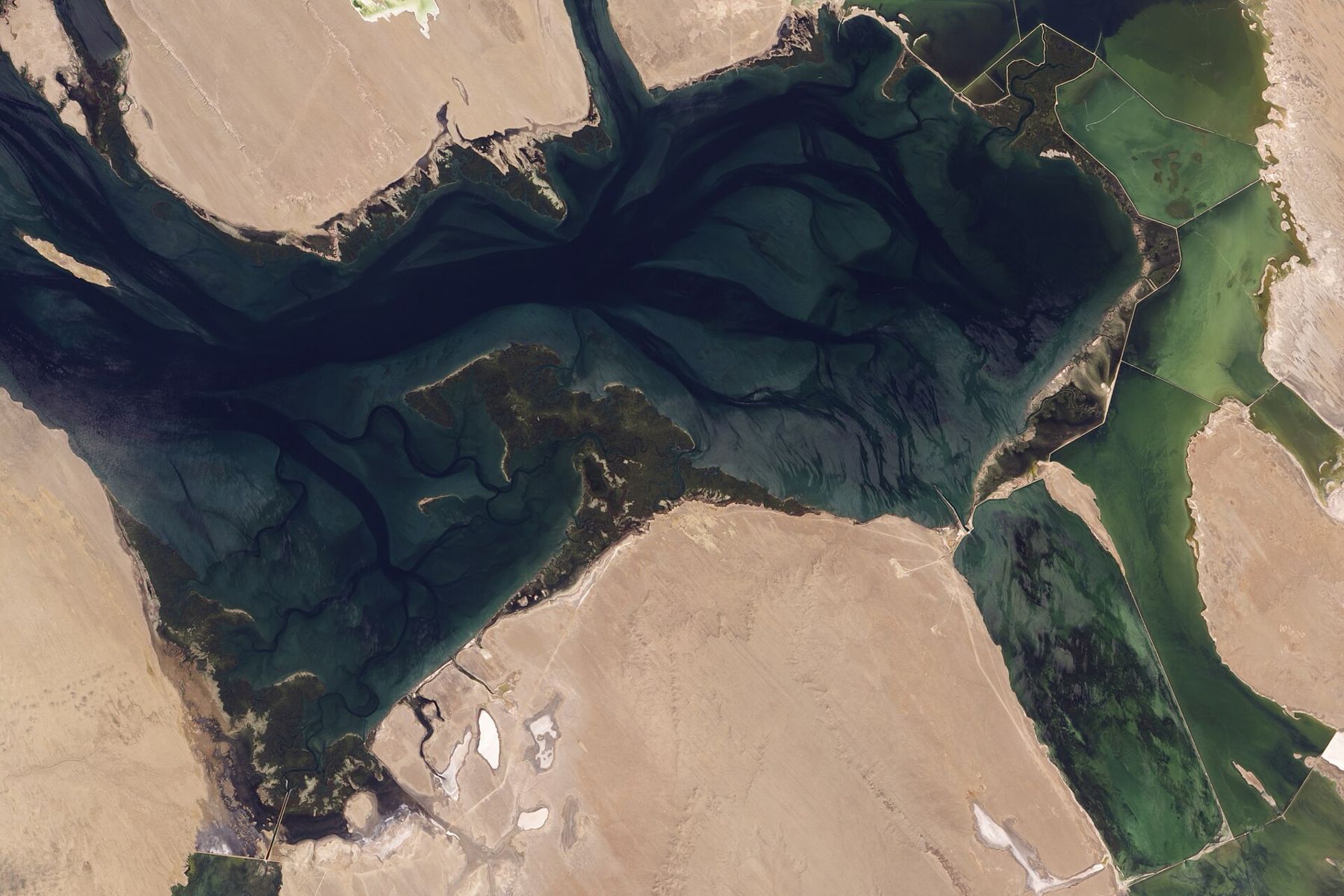
The lagoons of Baja California Sur look empty from the shore: flat water, low dunes, mangrove edges, a long horizon. Then a plume of spray rises far off, and another nearby, and you realise the water is full of whales. In late winter these shallow lagoons hold some of the highest concentrations of large whales anywhere, most of them gray whale mothers with young calves.
The gray whale, Eschrichtius robustus, makes one of the longest migrations of any mammal. The eastern North Pacific population feeds through summer in the Bering and Chukchi Seas, then swims south along the coast of North America to the Pacific side of Baja, a round trip of many thousands of kilometres.
Why the whales come to the lagoons
The lagoons are warm, shallow and sheltered from the open Pacific swell, and largely free of orcas, the main predator of young calves. Calves are born with little blubber, and the calm water lets them save energy while they nurse on their mothers' rich milk and build strength before the long journey north.
Three lagoon systems are the main sites. Laguna Ojo de Liebre, near Guerrero Negro, is the largest. Laguna San Ignacio, further south and more remote, is known for whales that approach boats. Bahía Magdalena, further south again, is a long system of channels and bays reached from Puerto Adolfo López Mateos and Puerto San Carlos. Ojo de Liebre and San Ignacio lie within the El Vizcaíno Biosphere Reserve and form part of a UNESCO World Heritage Site.
When to go
The first whales usually reach the lagoons in December and January, and numbers build to a peak around February and early March. Males and females without calves tend to leave earlier, while mothers and calves often stay into March or April. Watching season in the lagoons generally runs from around mid-December or January until April, but the exact opening and closing dates are set each year, so check before you go.
Numbers vary between years, and recent years have seen marked changes in the population, linked to conditions on the Arctic feeding grounds. A busy season is likely in late winter, but not guaranteed.
Turn the page to JanuaryMonarch butterflies in the Michoacán forestsHow a boat trip works
Whale watching inside the lagoons is regulated. Only licensed operators may take visitors out, usually in pangas, the small open fibreglass boats used across this coast, with a local driver. The number of boats in the watching zones at one time is limited, and trips have set durations. Most outings last a couple of hours, and calm mornings usually have the best conditions before the afternoon wind rises.
The boats move slowly into the watching zone and then cut their engines or idle. What happens next is up to the whales. Often you watch blows and backs at a distance. Sometimes a mother brings her calf towards the boat, and the pair may circle it, surface alongside or rest beneath it.
The boats move slowly into the watching zone and then cut their engines or idle.
The friendly whales
Gray whales approaching small boats and allowing people to touch them was first widely reported from Laguna San Ignacio in the 1970s, and it has continued since in several lagoons. Why some whales do this is not fully understood. It has become one of the reasons people come here, and it carries a responsibility.
Approaches must come from the whale. Boats do not chase whales, cut across a mother and calf, or separate them. Follow your guide's instructions about hands and touching, sit still, and keep noise low. A whale that leaves should be allowed to leave.
- Never lean out of the boat or stand up suddenly.
- No drones over the whales.
- Keep sunscreen and food off your hands if a whale comes close.
- Take all litter back to shore.
Reading what you see
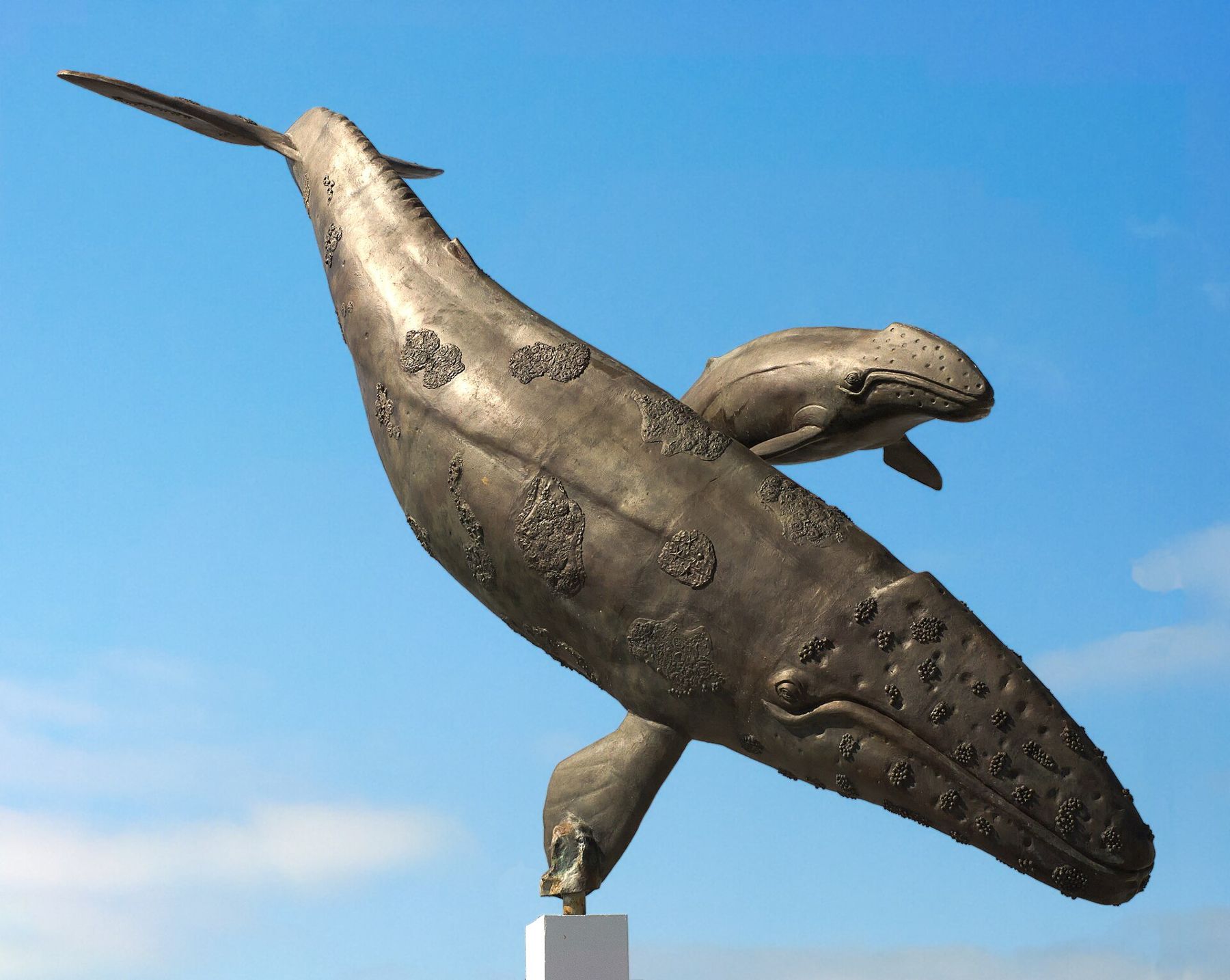
A gray whale's blow is low and often heart-shaped or V-shaped when seen from behind. Its skin is grey and mottled, marked with patches of barnacles and pale orange whale lice. It has no dorsal fin, only a low hump and a row of knuckles towards the tail.
Calves are dark and smooth, around four to five metres long at birth. You may see them riding close beside their mothers, almost touching. Spyhopping, when a whale rises vertically with its head above the water, is common. Breaching tends to happen near the lagoon mouths, often by adult animals.
Watch the shoreline as well as the water. Ospreys nest on posts and channel markers, coyotes patrol the beaches at low tide, and flocks of brant and shorebirds work the mudflats. The lagoons are busy with life well beyond the whales.
Getting there and practicalities
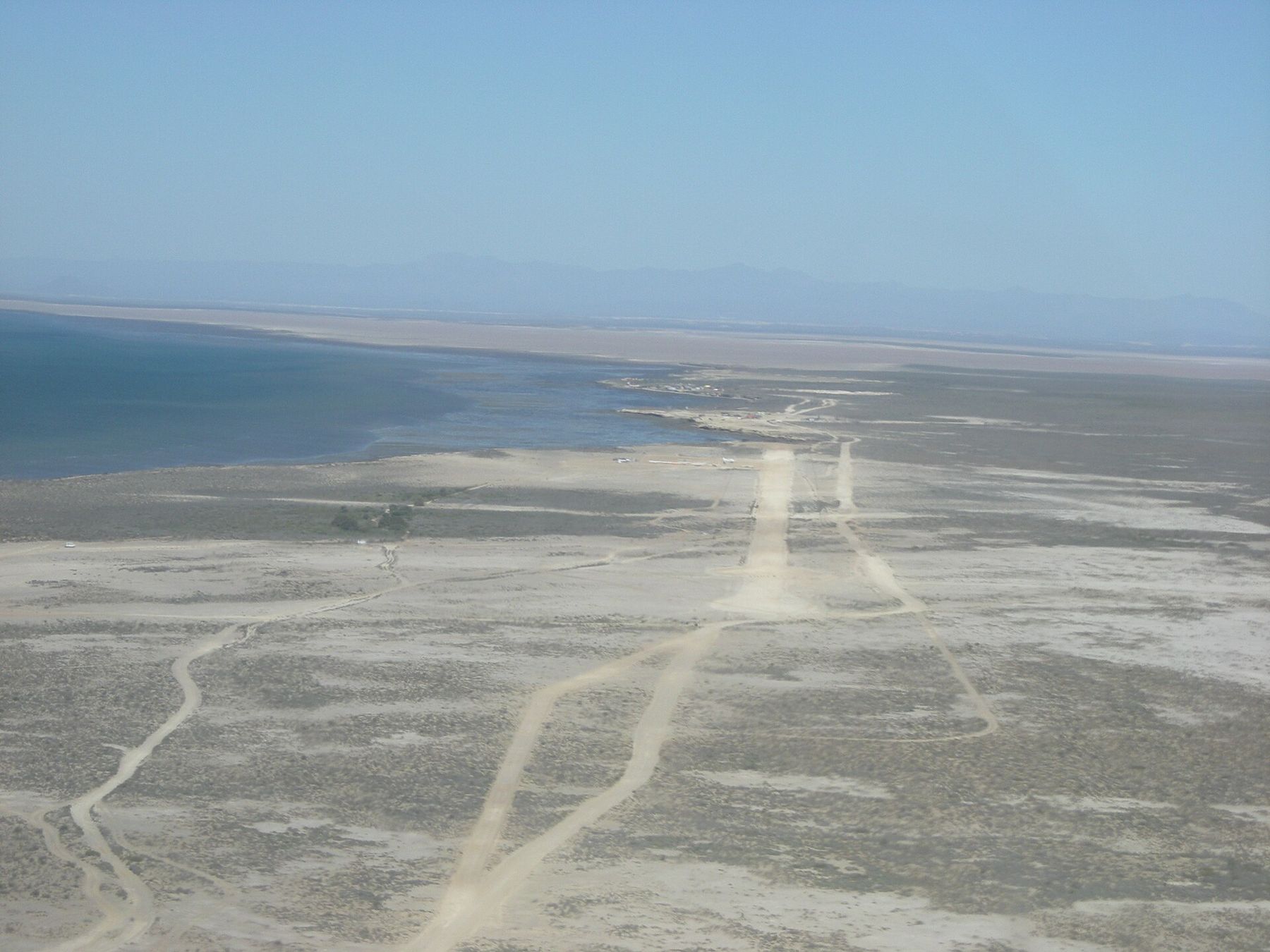
Guerrero Negro, on the main highway down the peninsula, is the nearest town to Ojo de Liebre and the easiest base. San Ignacio is inland, with the lagoon a long drive away on a partly unpaved road; camps on the shore make it practical to stay near the water. Magdalena Bay is reached from the Ciudad Constitución area. Distances on the peninsula are long, and driving at night is best avoided.
Out on the water, wind and spray make the air feel cold even when the sun is strong, so bring a windproof layer, a hat and sunscreen. Protect cameras in a dry bag. Winter on the Pacific side of Baja coincides with other great seasonal gatherings, such as the monarchs in the forests of Michoacán, and later in spring the wildflowers of Anza-Borrego just to the north.