Autumn · Vermont
Autumn colour in Vermont
Every autumn the hardwood forests of Vermont turn red, orange and gold from the high ridges down. How the colour works, when it moves and how to see it without the crowds.
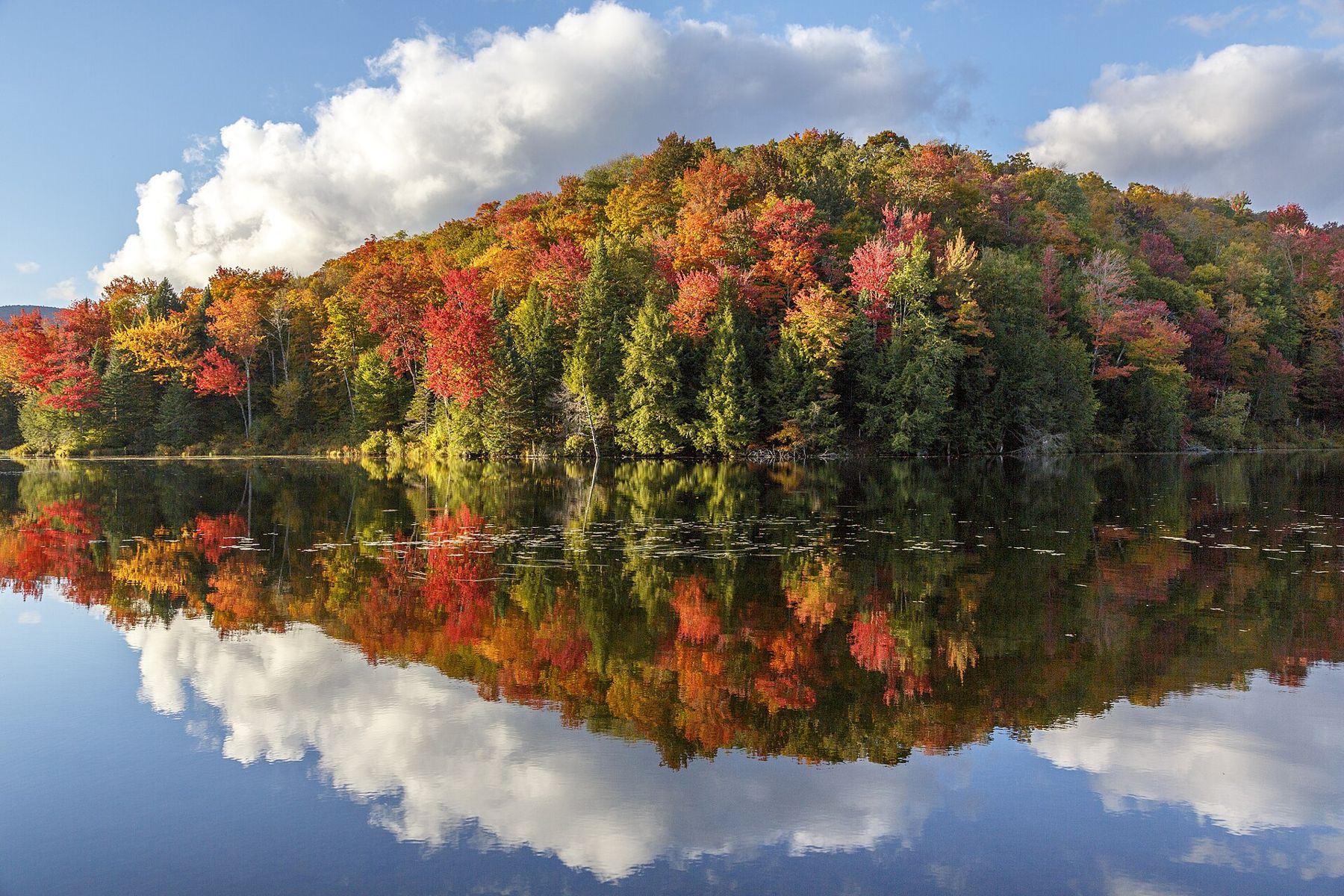
Vermont's autumn colour is a forest event, not a tourist one, though it brings plenty of tourists. The state is largely covered in mixed hardwood forest, and its most common broadleaf trees are among the brightest in the world when their leaves turn. For a few weeks each year the hills of the Green Mountains turn red, orange and gold, and the change rolls downhill and southward like a slow tide.
How the colour works
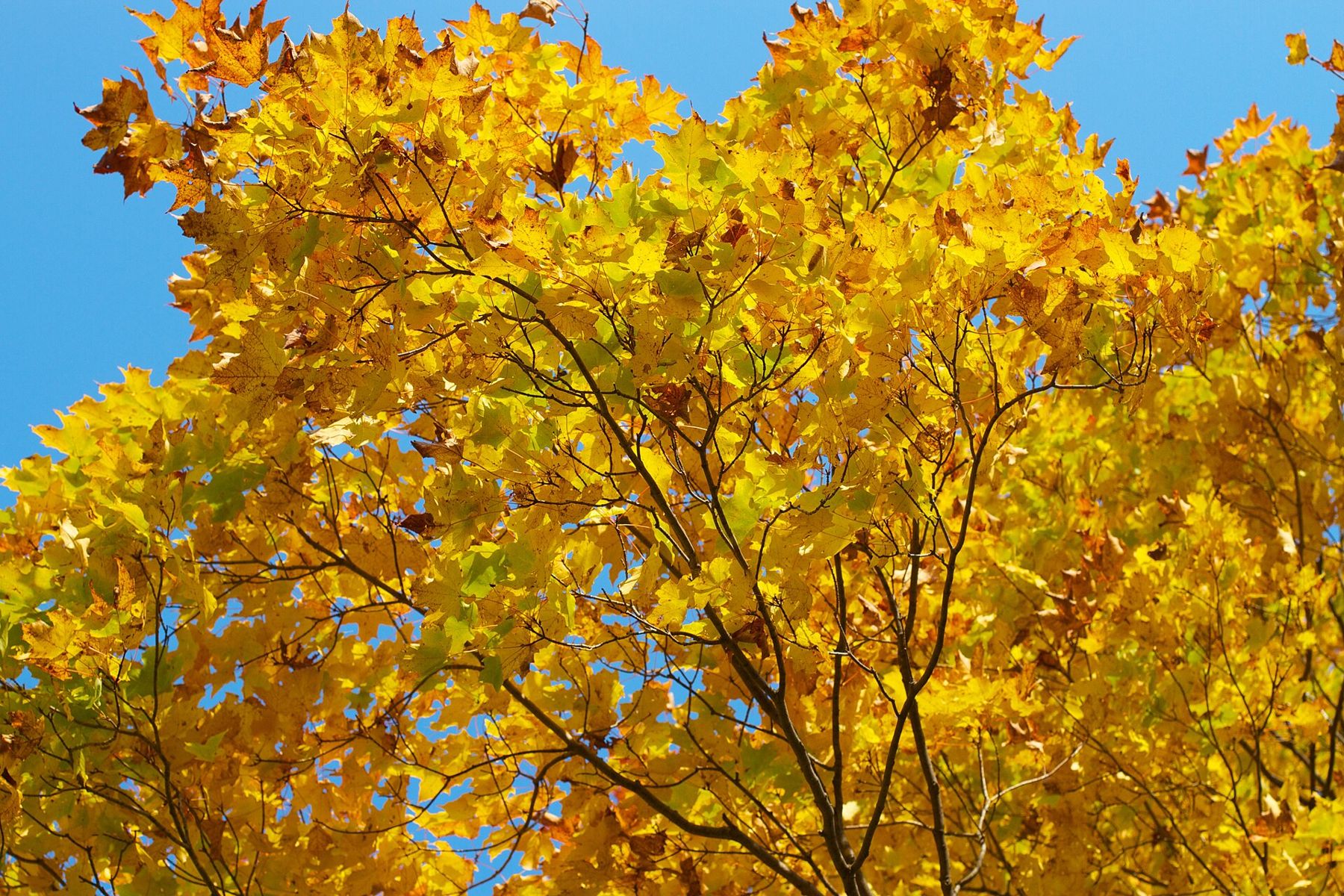
All summer, leaves are green because of chlorophyll, which the tree keeps renewing as it uses sunlight. As nights lengthen in late summer, trees stop making chlorophyll and start drawing nutrients back into their branches before the leaves fall. As the green fades, yellow and orange pigments called carotenoids, present in the leaf all along, show through. Some trees, red maples and sugar maples above all, also produce new red pigments in autumn, called anthocyanins.
Weather decides how vivid that red becomes. Sunny days and cool nights that stay above freezing tend to bring the strongest colour, because sugars build up in the leaves and feed anthocyanin production. A hard early frost, a long drought or strong wind and rain at the wrong moment can dull or shorten the season. That is why one year is spectacular and the next merely good.
The trees to know
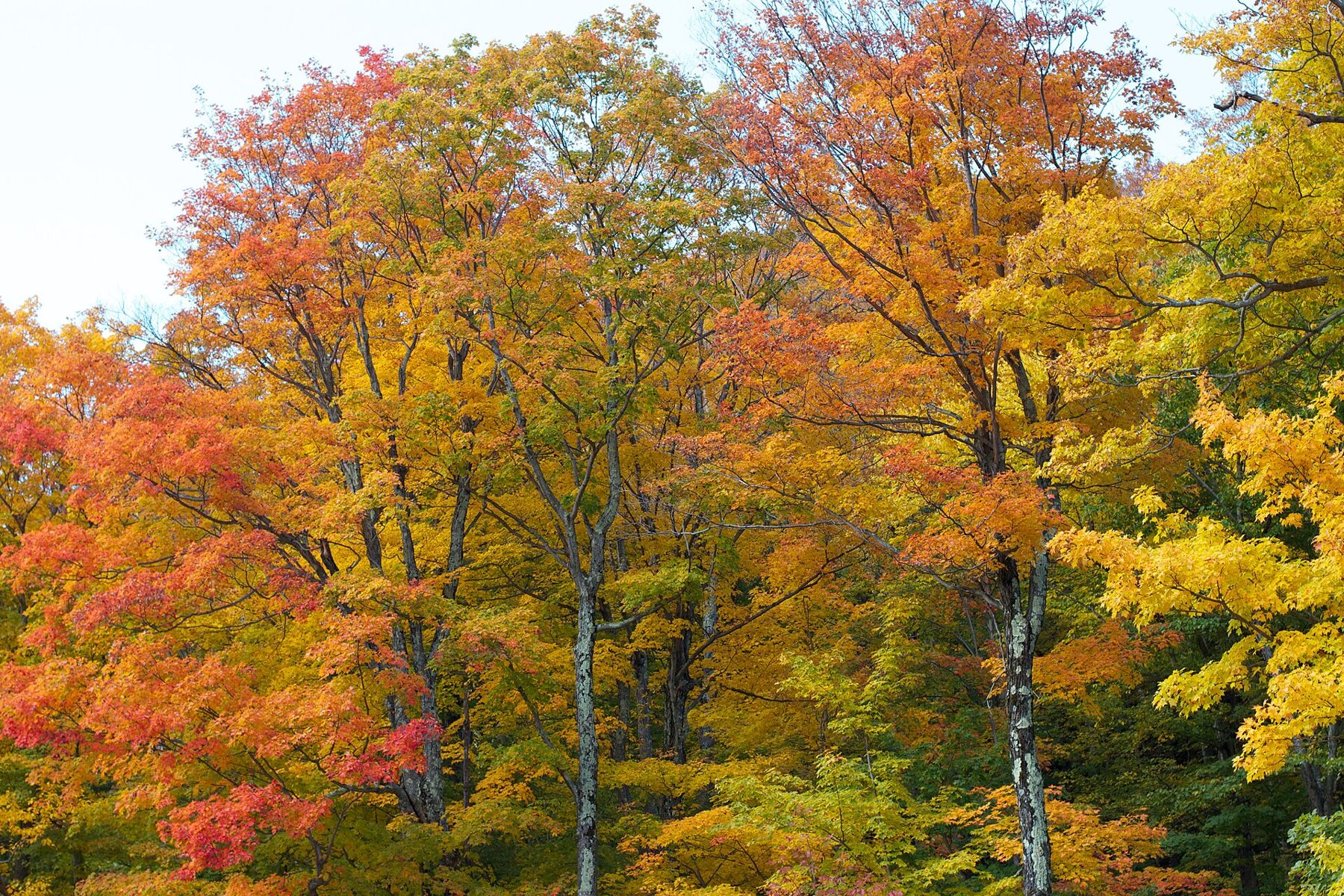
- Sugar maple: the state tree, and the one that gives the hills their glowing orange. The same trees are tapped for maple syrup in late winter.
- Red maple: often the first to turn, scarlet in wet hollows and along swamp edges.
- Birches, aspens and beech: yellows and bronzes that hold the colour together.
- Spruce, fir, hemlock and pine: the dark green that makes everything else stand out.
Look closely at a single sugar maple and you will often find it changing unevenly, with the crown or the sunny side turning first while the shaded lower branches stay green. Trees stressed by drought, road salt or damaged roots can colour early and drop their leaves sooner. A scarlet maple in a roadside ditch in early September is usually a tree under strain, not a sign that peak has arrived.
When and where it peaks
Colour comes first at higher elevations and in the north, where nights cool soonest. The ridges of the northern Green Mountains and the Northeast Kingdom often turn in late September. Mid-elevations and central valleys usually follow in early October, and the lower valleys of the south and the Champlain Valley can still look bright into mid-October. These are general patterns, not dates. A warm September can push everything back a week, and a cold snap can hurry it along.
Because colour moves, the best plan is a flexible one. Base yourself somewhere central and drive towards whichever band is at its best. The state publishes foliage updates during the season, and local reports change daily; check them before each drive rather than fixing a route weeks ahead.
Back roads and high places
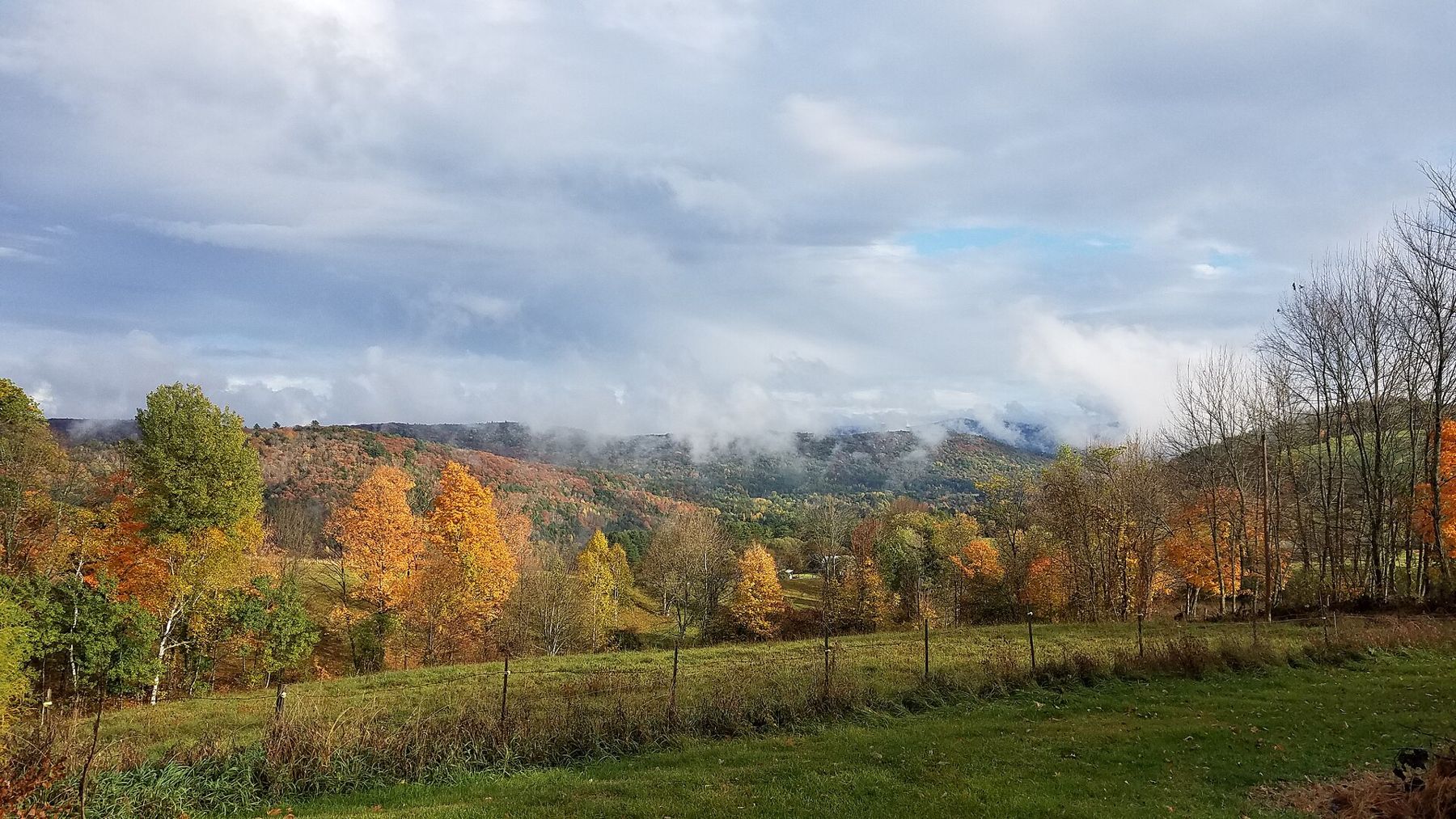
Route 100 runs nearly the length of the state, following valleys along the eastern side of the Green Mountains, and it is the classic north-south drive. Its weakness is its fame: on weekends at peak, traffic can crawl. The quieter roads that branch off it, many of them unpaved, climb through farmland and woodlots where you may meet no one for a while. A paper map helps, since phone coverage is patchy in the hills.
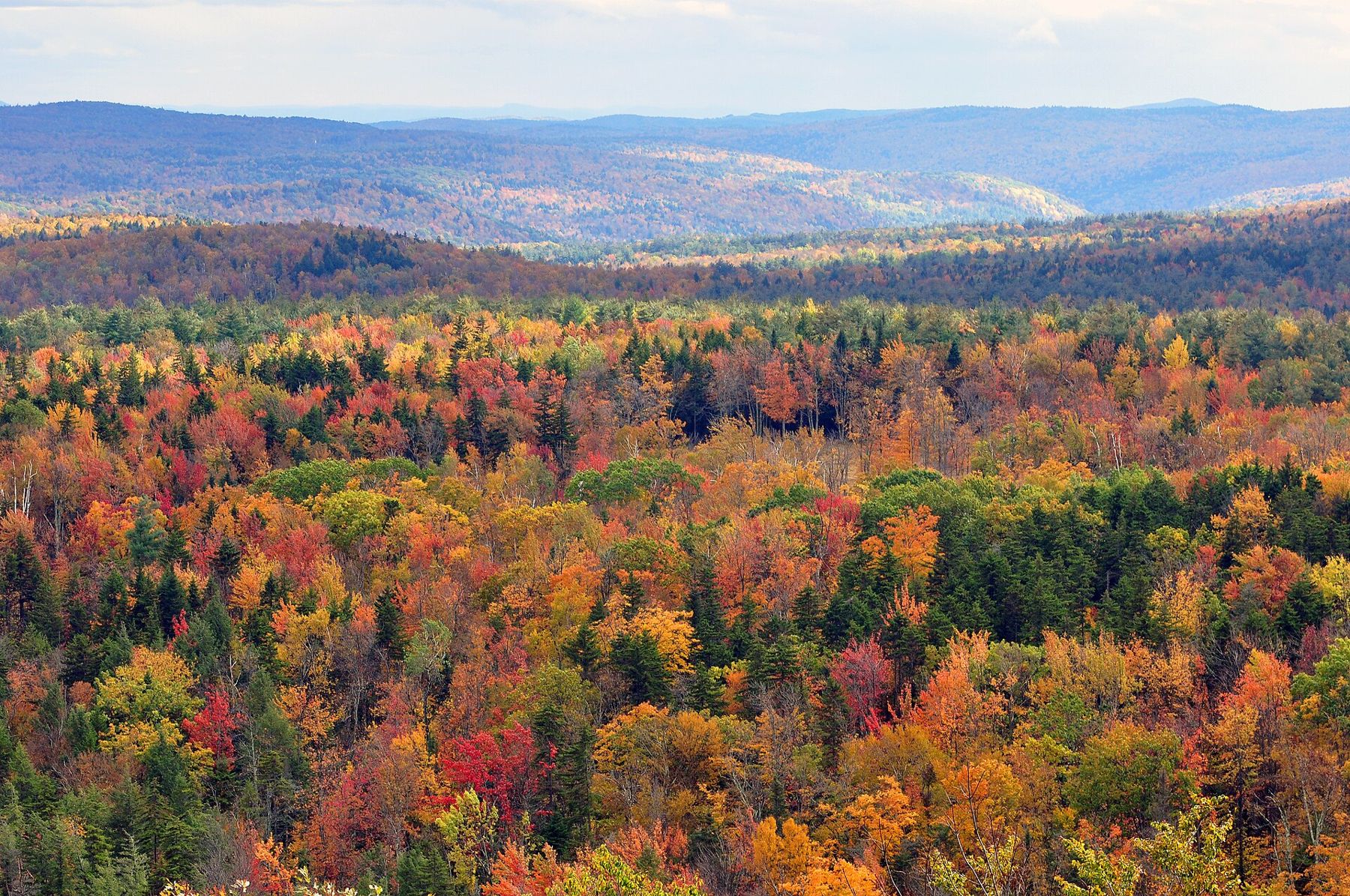
Gaps and notches through the mountains give the widest views. Smugglers' Notch, on the road between Stowe and Jeffersonville, squeezes between cliffs below Mount Mansfield, the highest peak in the state. The road is narrow and twisting, unsuitable for large vehicles, and closed in winter. In the south, the overlook at Hogback Mountain on Route 9 looks out over ridge after ridge of forested hills on a clear day.
Walking adds what the car cannot. Even a short trail through a sugarbush gives you the sound of leaves dropping, the smell of damp earth and the light filtering through orange canopy. Stay on marked trails, especially on high ground, where thin soils and alpine plants are easily damaged.
Even a short trail through a sugarbush gives you the sound of leaves dropping, the smell of damp earth and the light filtering through orange canopy.
Covered bridges
Vermont has around a hundred historic covered bridges, more for its size than almost anywhere in the country. They were roofed to protect the timber deck and trusses from rain and snow, which helped them last for generations. Many still carry traffic on minor roads, and their red or weathered wood sits well against the hills in autumn. If you stop to look, use the pull-outs, keep clear of the roadway and remember that some bridges are one lane only.
Regions with their own character
Vermont is small, but its regions feel different in autumn. The Northeast Kingdom, in the far northeast corner, is the most rural part of the state: rolling farmland, small lakes, long views and fewer visitors, with colour often arriving early. The central Green Mountains around Stowe and the high gaps hold the steepest slopes and the most dramatic contrasts between dark conifer ridges and orange hardwoods. The south, around the Molly Stark Trail and the West River valley, turns later and gives a second chance if you miss the north.
The Champlain Valley in the west is lower, flatter and milder, with orchards and open farmland, and it is often the last part of the state to turn. On a clear day the Adirondacks rise across the lake in New York, and the mix of water, fields and distant mountains makes a quieter alternative to the busy valleys in the middle of the state.
Practical notes for the season
Peak foliage is one of the busiest times of year in Vermont. Accommodation fills early, especially on weekends and around the October holiday weekend, and prices rise. Weekdays are quieter everywhere. Weather swings widely: a warm afternoon in a T-shirt can follow a frosty dawn, and rain is common. Pack layers and a waterproof jacket.
- Start early. Morning light on frost-whitened fields and steaming ponds is when the colour looks deepest.
- Cloudy days are not wasted; overcast light makes reds and oranges look richer than harsh sun.
- Respect private land. Fields, sugarbushes and orchards belong to someone; ask before walking in.
- Park safely and fully off the road. Sudden stops on narrow roads cause accidents every season.
Vermont's foliage belongs to a family of autumn spectacles in temperate forests. The larches of the Alps turn gold a little later, and in the Highlands of Scotland the red deer rut fills the glens with the roars of stags in the same weeks. In spring the cycle starts over, from bluebell woods in an English spring to the sap rising in Vermont's own sugar maples.