Spring · Anza-Borrego
Desert wildflowers in Anza-Borrego
In most springs the Colorado Desert around Borrego Springs flowers in patches. In a few, after the right rains, whole valley floors turn purple, white and yellow.
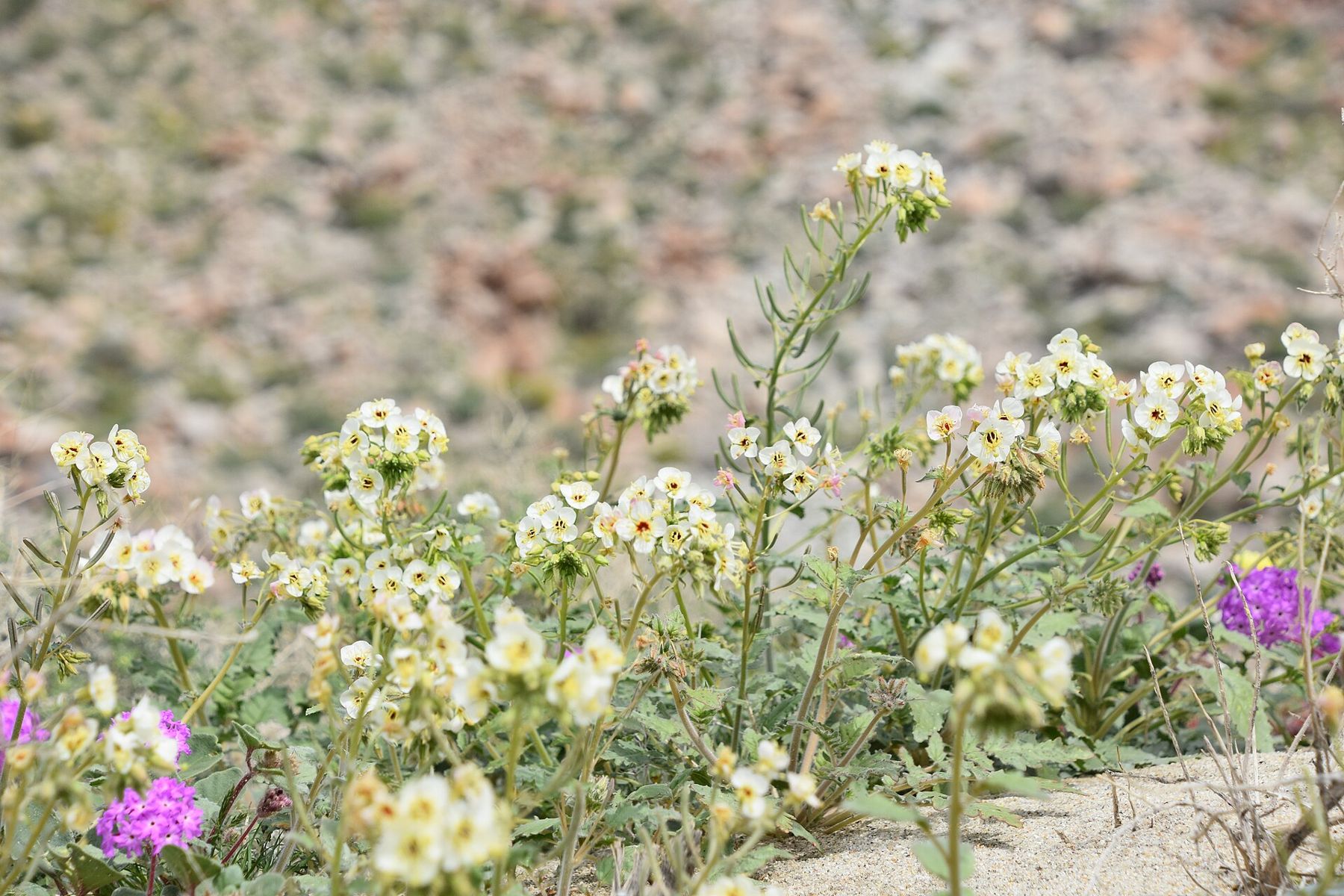
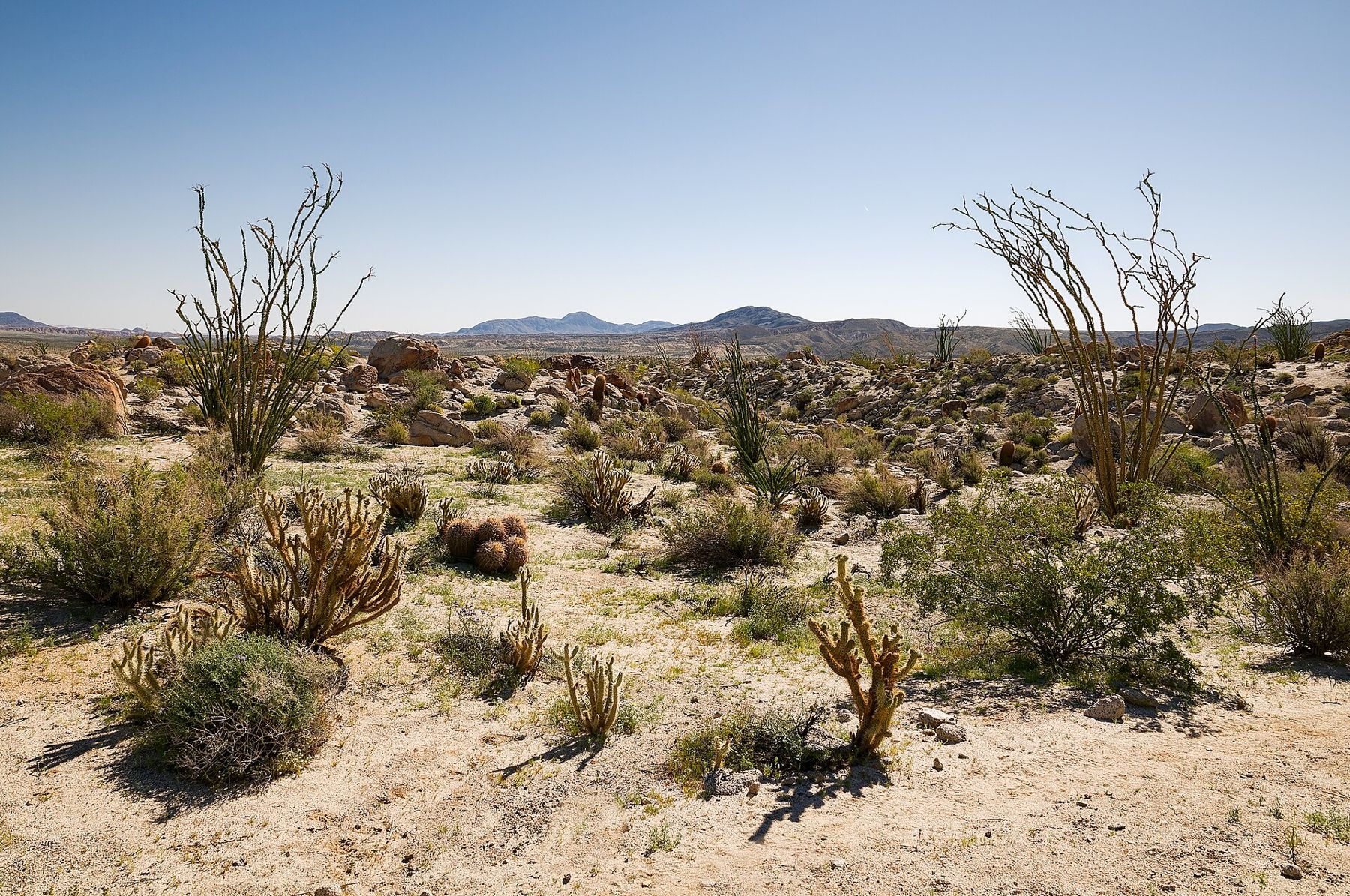
For most of the year the floor of the Borrego Valley is grey-brown gravel and sand, broken by creosote bushes and the spiny wands of ocotillo. Then, in some late winters, green appears between the stones, and within weeks the ground is covered in flowers: pink sand verbena across the dunes, white primroses opening in the evening, yellow desert sunflowers along the washes.
Anza-Borrego Desert State Park, in the Colorado Desert of southern California east of San Diego, is the largest state park in California. It surrounds the small town of Borrego Springs, and its spring wildflowers draw large crowds in good years. Understanding why some years are good, and most are not, is the key to planning a visit.
What makes a superbloom
Most of the plants that make a desert bloom are annuals. They spend the dry years as seeds in the soil, sometimes for many years, waiting for enough rain to make germinating worthwhile. A single shower is not enough. What triggers a large bloom is a sequence: soaking rain in autumn or early winter to wake the seeds, further rain spaced through the winter to keep the seedlings alive, then mild, sunny weather without strong wind or early heat.
When all of that comes together, billions of seeds germinate at once, and the result is what has come to be called a superbloom. Anza-Borrego had notable ones in 2017 and 2019, among others. In ordinary springs, there are still flowers, but in scattered patches along roadsides, washes and canyon bottoms, and finding them takes more searching.
There is no way to know months ahead which kind of year it will be. Watch the winter rainfall, then follow current bloom reports from the park as spring approaches.
Where and when the flowers appear
The bloom moves with elevation and temperature. The low desert floor around Borrego Springs usually flowers first, from around late February into March. Canyons and slopes follow, and the higher parts of the park can still be in flower in April. A hot spell or dry wind can end the low-desert bloom within days.
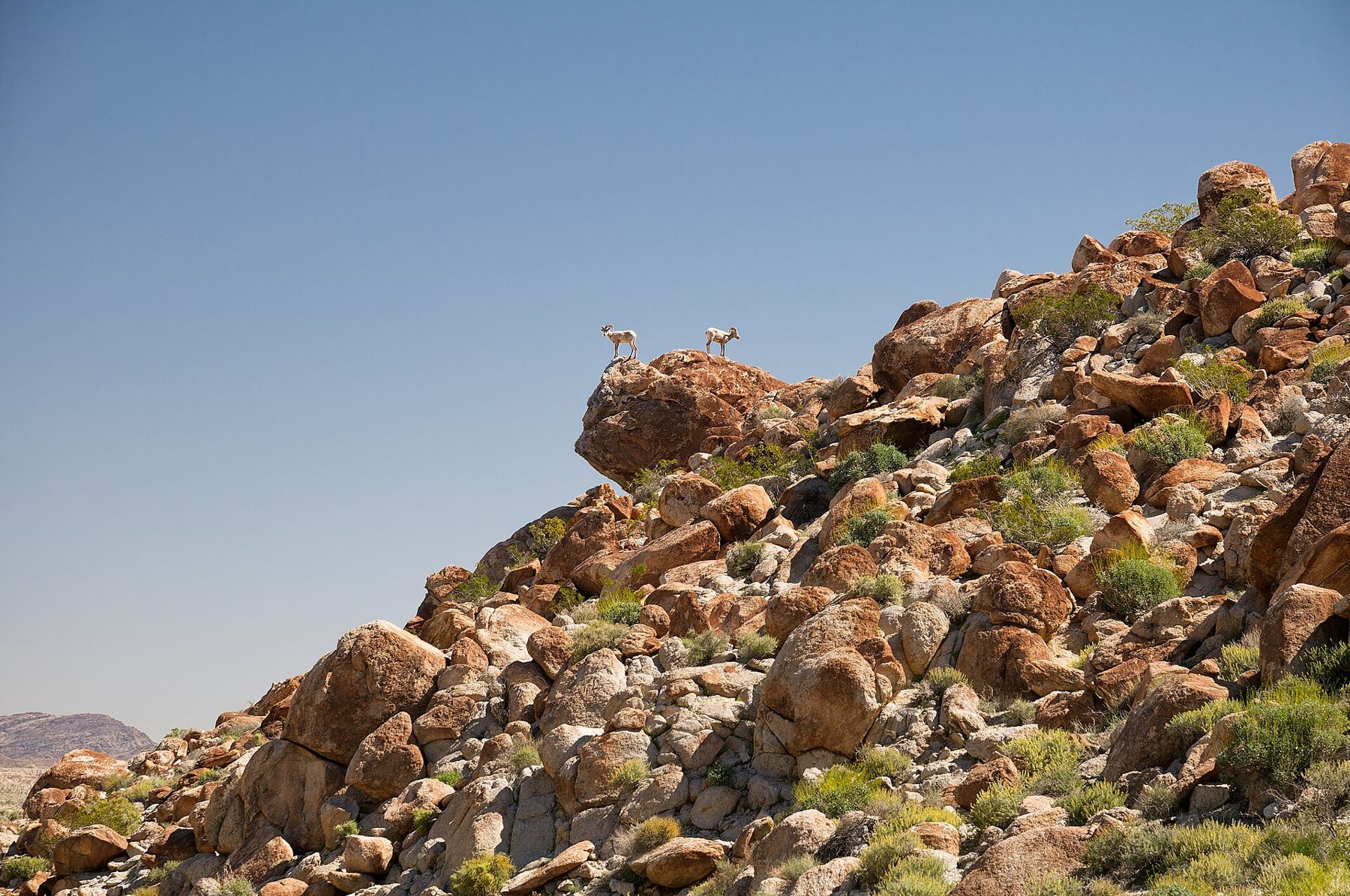
The flat ground north of Borrego Springs, along Henderson Canyon Road and towards the mouth of Coyote Canyon, often has some of the densest displays of sand verbena and dune primrose in good years. The park's visitor centre, west of town, has a short desert garden and current information on where the flowers are. Canyons such as Borrego Palm Canyon show more perennial plants, and the chance of desert bighorn sheep.
Further afield, the park is huge, and its badlands, washes and high desert each bloom on their own schedule. Slopes facing the sun warm faster than shaded ones, sandy ground behaves differently from rocky ground, and a wash that caught a local storm can be thick with flowers while the next valley is bare. In a patchy year, driving slowly along paved roads and stopping wherever colour shows is often the most productive approach.
Timing within the day matters too. Many desert flowers open only in sun and warmth and close again in cold or cloud. Evening primroses do the reverse, unfolding late in the afternoon for night-flying moths. A field that looks dull at nine in the morning can be bright by eleven.
Turn the page to AprilBluebell woods in an English springWhat to look for
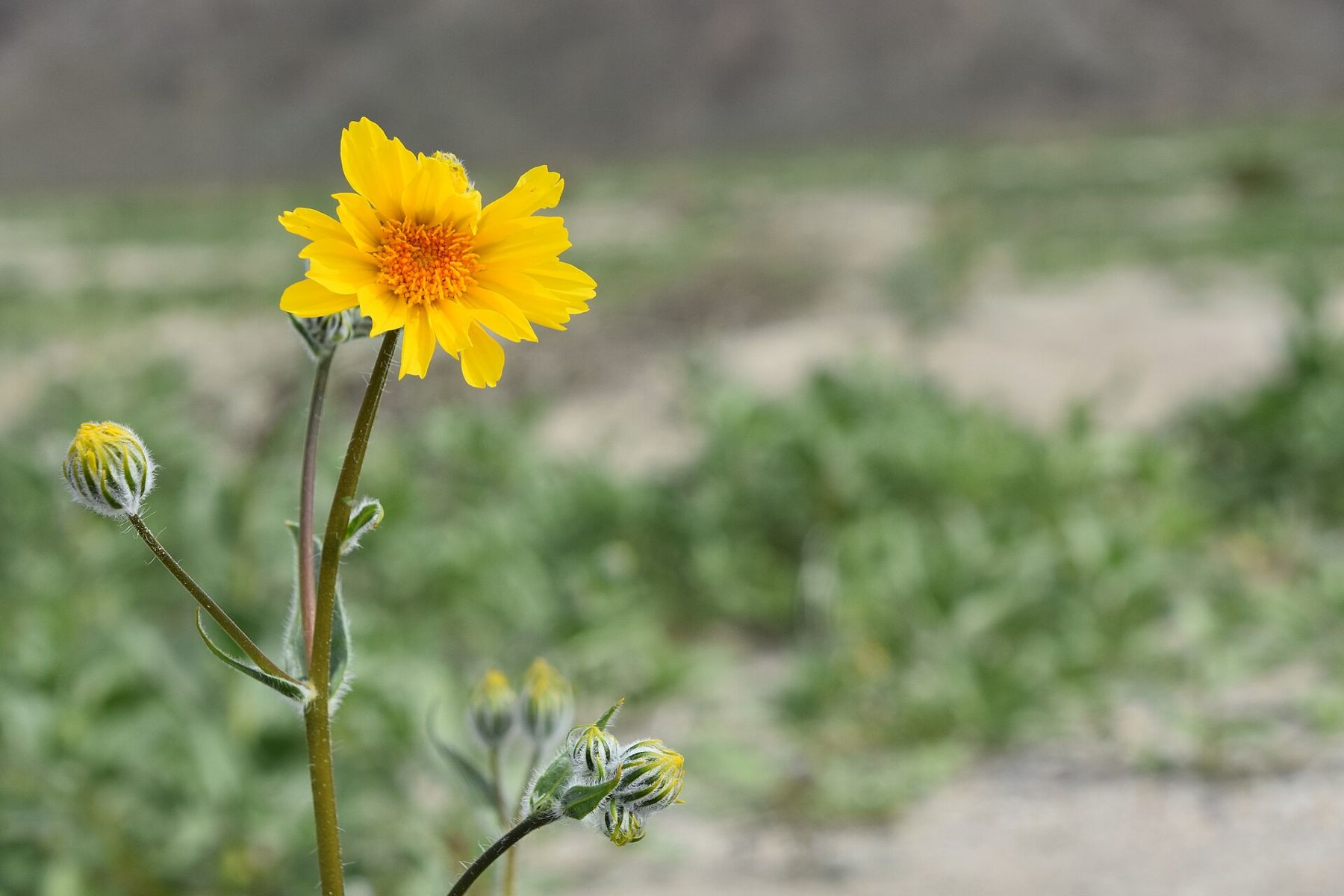
Desert sand verbena, Abronia villosa, forms low pink-purple mats on sandy ground and smells sweet in the evening. Dune evening primrose opens large white flowers in late afternoon that turn pinkish as they fade. Desert sunflower and desert dandelion add yellow; brown-eyed primrose and desert lily, with its white trumpets on a tall stem, are scattered among them.
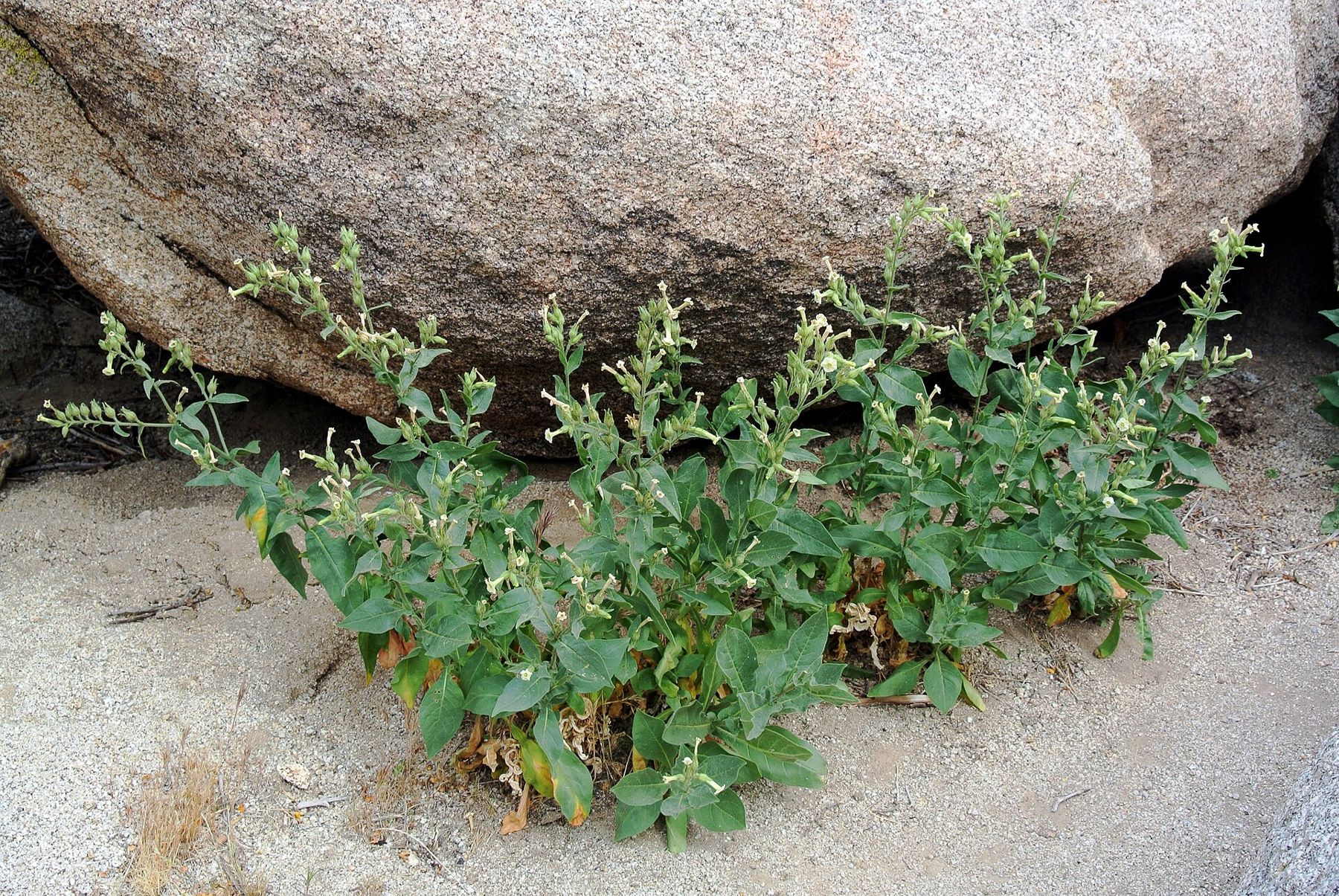
The perennials flower even in drier years. Ocotillo puts out red flower clusters at the tips of its stems, often after rain, and leafs out green for a few weeks. Chuparosa, a shrub with tubular red flowers, attracts hummingbirds. Barrel and beavertail cacti flower later, into spring, with yellow and magenta blooms.
When all of that comes together, billions of seeds germinate at once, and the result is what has come to be called a superbloom.
A good bloom feeds everything around it. In big years, the green and yellow caterpillars of the white-lined sphinx moth can be extremely numerous, eating their way across the flowers, and the adults later hover at blooms at dusk. Bees, beetles and butterflies are everywhere, and lizards and birds follow the insects.
Staying on paths and leaving the flowers
A superbloom draws far more people than the desert usually sees, and the damage they can do is lasting. Each trampled patch loses not only this year's flowers but the seeds they would have set for the next good year. Desert soils also have a fragile surface crust that holds them together; once broken, it takes a very long time to form again.
- Stay on trails, in washes or on bare ground. Do not walk into a field of flowers for a photograph.
- Do not pick flowers or collect seeds. Plants are protected in the state park.
- Drive and park only on established roads and turnouts; desert vehicles can scar the ground for decades.
- Keep dogs on a lead and on roads, and check park rules about where they may go.
- Give bighorn sheep plenty of space, and never use a drone near wildlife.
A hand lens is worth bringing. Many of the smallest desert annuals, the so-called belly flowers, are only a few millimetres across and best seen by kneeling on bare sand beside a trail.
Heat, water and planning a day
Even in March, the desert floor can be hot by midday, with strong sun and little shade. Carry more water than you think you need, wear a hat and sunscreen, and plan walks for the morning or late afternoon, when the light is better for the flowers anyway. Cell coverage is patchy in the backcountry, and many roads are unpaved sand that needs a suitable vehicle.
In a big bloom year, weekends bring heavy traffic and crowded parking around Borrego Springs. Weekdays and early starts make a large difference. After dark, look up: Borrego Springs is a designated dark-sky community, and the desert night is one of the clearest in southern California.
Spring blooms happen all over the world, each tied to its own trigger, from the bluebell woods of England that flower before the canopy closes to the alpine meadows that follow snowmelt. In Anza-Borrego the trigger is rain, and in a good year the gray whales off Baja are still in their lagoons a few hundred kilometres to the south.